
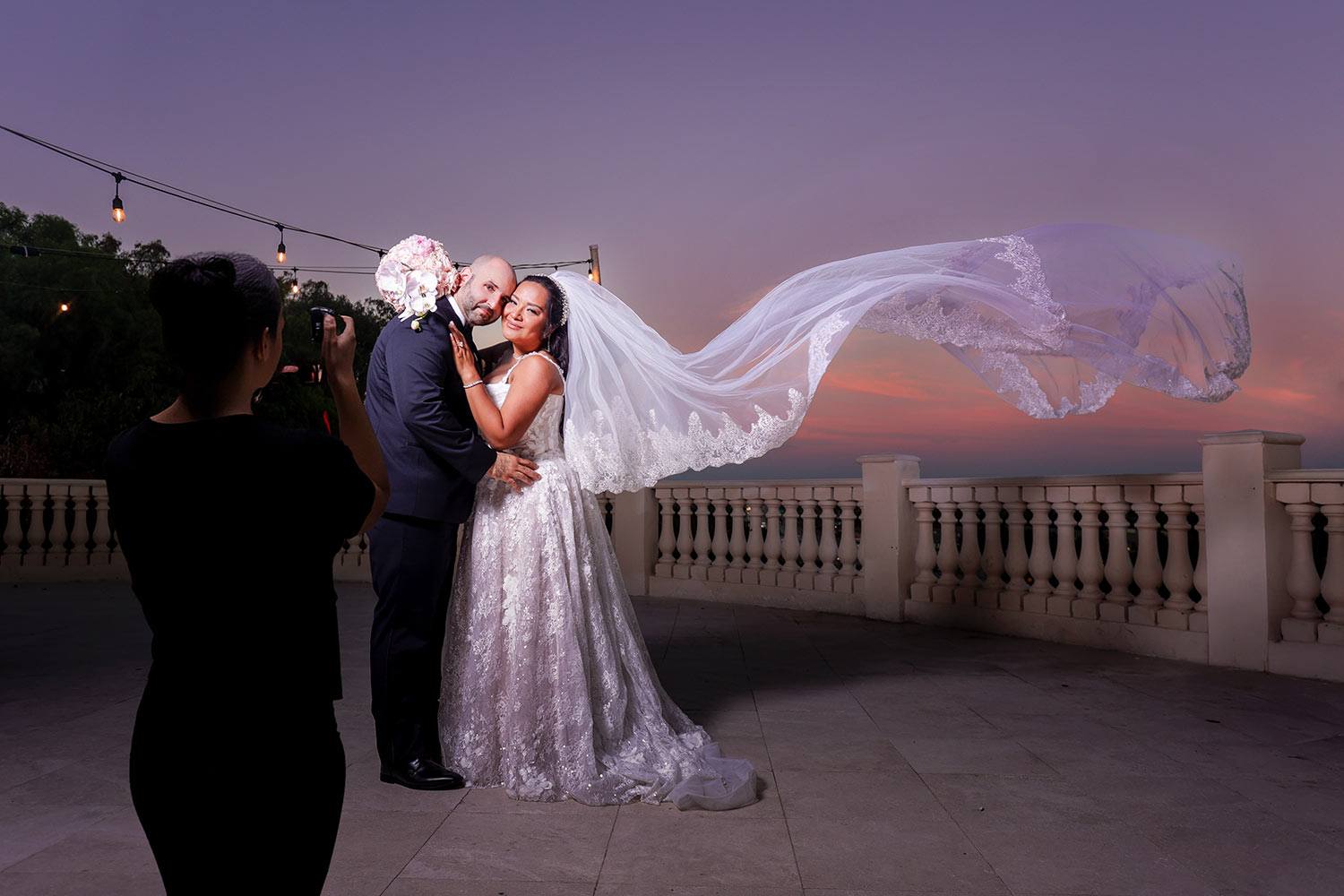
Start With the Pose, Not the Veil
One of the biggest mistakes photographers make when creating dramatic cathedral veil photography is concentrating so much on the veil that they forget about the couple!
Before I even think about creating movement, I make sure my bride and groom look fantastic together. After all, a gorgeous flying veil isn't going to save an awkward pose!
I start by bringing the couple close together and looking at how their bodies connect. I pay attention to their shoulders, hands, head positions, and the space between them. Even small adjustments can make an enormous difference.
For example, I often ask the bride to turn her body slightly rather than standing completely square to the camera. Then, I'll have her shift her weight, soften her shoulders, and position her hands naturally against her partner.
I also watch the groom's hand placement. A hand resting gently at the bride's waist can create a beautiful connection. However, I al
How to Create Beautiful Flying Veil Photos
Now that your couple is beautifully posed, it's time to have a little fun!
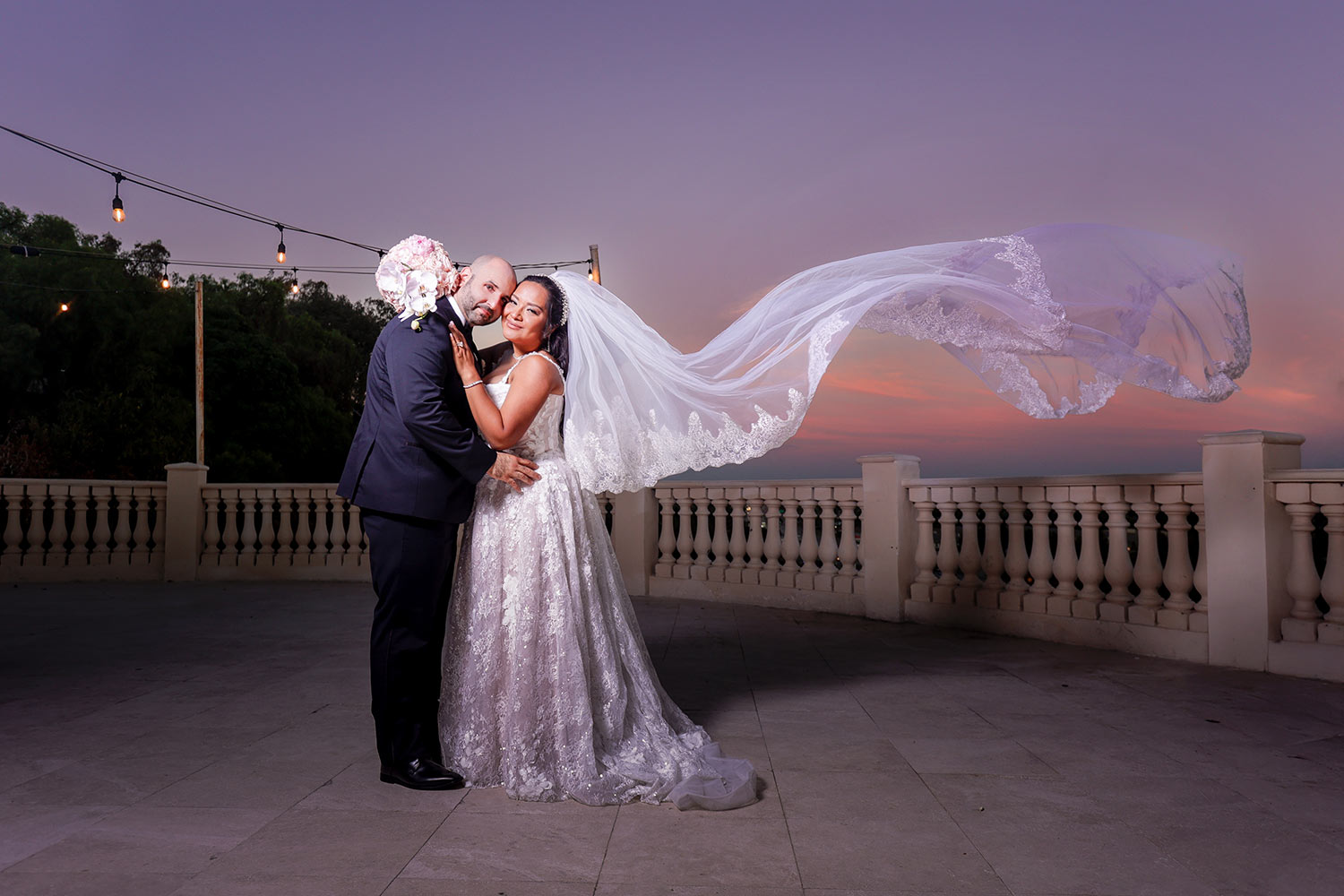
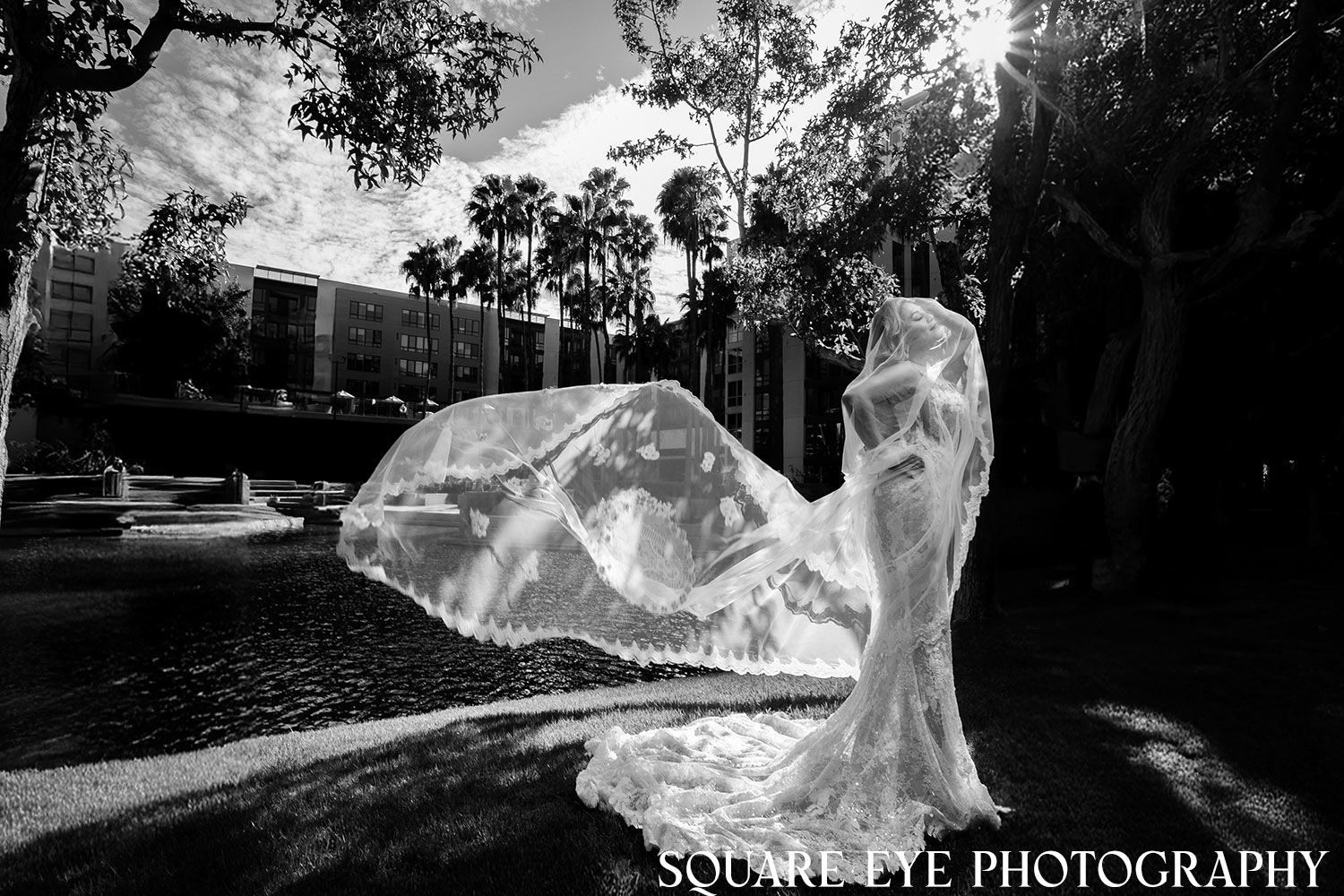
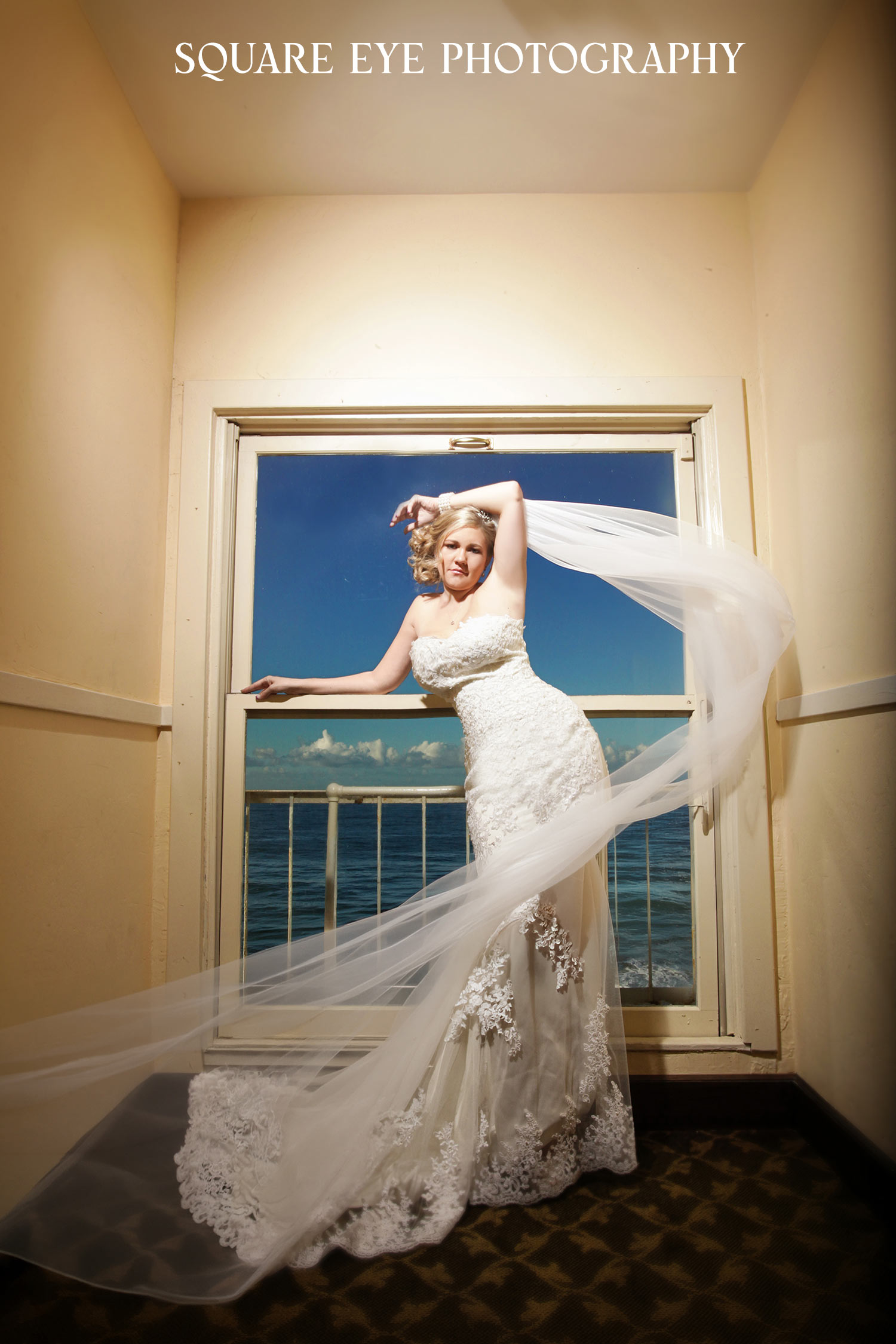
One of my favorite techniques in cathedral veil photography is creating that gorgeous, flowing veil effect. You know the photographs I'm talking about—the ones where the veil looks like it's floating effortlessly through the air.
But here's a little secret: there's usually someone just outside the frame throwing that veil! 😂
Position Your Assistant Before You Start
Whenever possible, I work with an assistant to create movement. I position them behind or beside the bride, depending on the direction I want the veil to travel.
Before we begin, I look at the composition and decide where I want the fabric to flow. For example, if there's a beautiful sunset to the right of my couple, I might have my assistant send the veil in that direction.
The goal is to complement the photograph, not cover the bride's face or create a giant tangled mess of tulle.
It's All About the Toss
Here's where a little practice makes a big difference.
Rather than simply throwing the veil straight up, I ask my assistant to lift the fabric gently toss the veil in the air and release it in the direction we've chosen.
A smooth, controlled toss often creates a much prettier shape than an aggressive throw. Additionally, lightweight veils tend to float longer, giving you a little more time to capture the movement.
I usually take several photographs because every toss creates a slightly different shape. Sometimes the first attempt is perfect. Other times, we're all laughing because the veil has decided to do absolutely everything EXCEPT what we wanted! 😂
Watch the Edges of the Veil
One detail I always pay attention to is the edge of the fabric.
If the veil has beautiful lace or embroidery, I want that detail visible rather than folded underneath itself. Therefore, I watch how the fabric opens in the air and adjust the direction of the toss when necessary.
I also make sure the veil isn't cutting awkwardly across someone's face or creating distracting shapes behind the couple.
Remember, the veil should enhance your composition, not become the entire photograph.
Camera Settings and Timing: Getting the Perfect Shot
You've posed your couple, positioned your assistant, and figured out exactly where you want the veil to fly. Now comes the fun part—actually getting the shot!
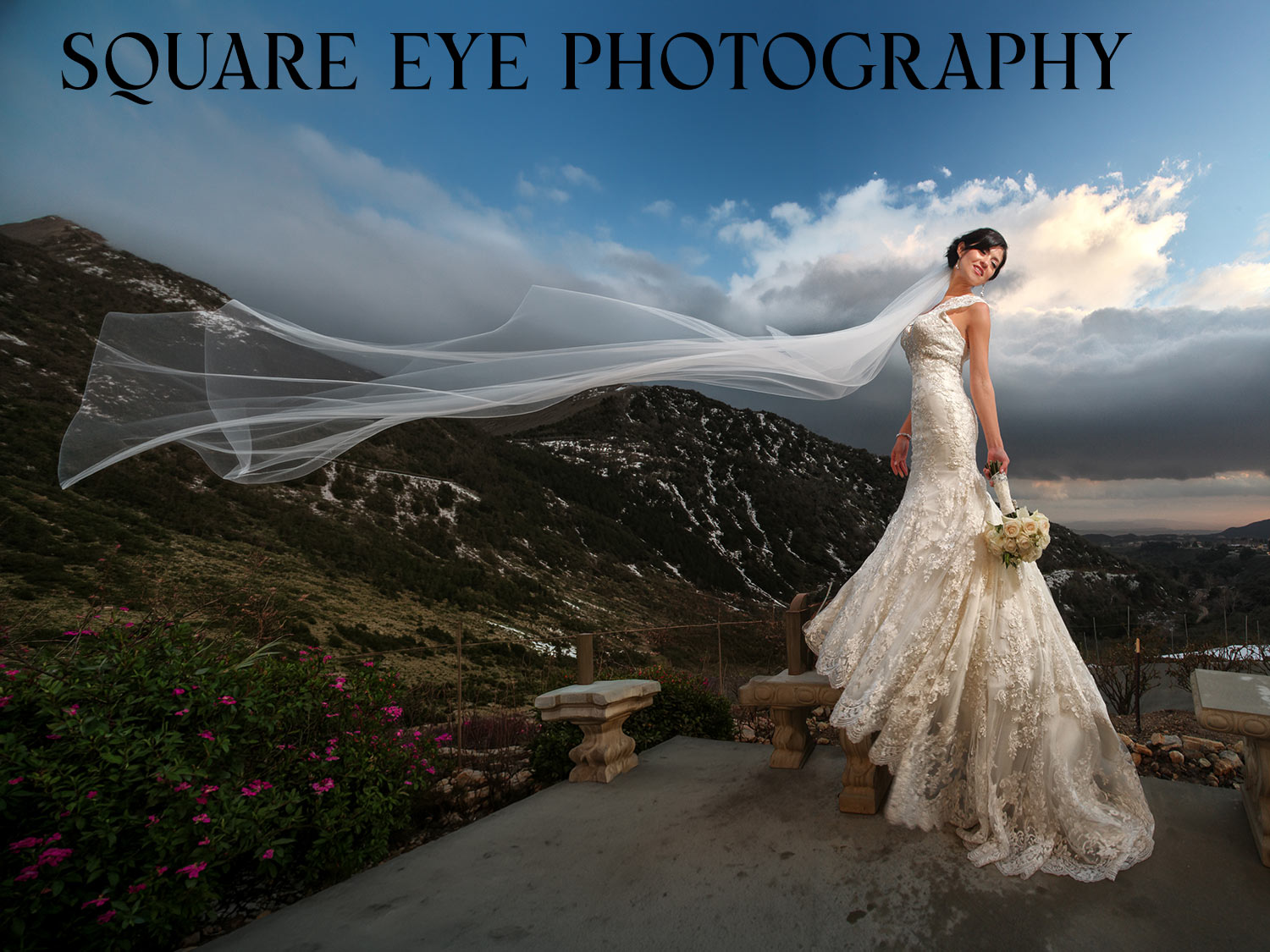
One of the biggest challenges with flying veil photography is timing. The fabric moves quickly, and that beautiful shape you see with your eyes might last only a fraction of a second.
Fortunately, a little preparation makes capturing that perfect moment much easier.
Use Continuous Shooting to Capture the Movement
When photographing a flying cathedral veil, continuous shooting can be incredibly helpful.
Rather than trying to anticipate one perfect moment, I recommend taking a short burst of photographs as the veil rises, opens, and begins to fall.
However, don't just hold down the shutter button and hope for the best! Watch the movement and time your burst around the moment when the fabric creates its most beautiful shape.
You'll often discover that the most interesting photograph happens just as the veil starts floating back down.
Choose Your Shutter Speed Carefully
If you're photographing with natural light, a faster shutter speed can help freeze the movement of the veil.
For example, 1/500 or 1/1000 of a second can be useful starting points, depending on your available light and how quickly the fabric is moving.
However, if you're using off-camera flash, things work a little differently.
Your camera's flash synchronization speed, the duration of your flash, and the amount of ambient light all affect how sharply that moving fabric appears.
In some situations, a short flash duration can help freeze movement beautifully. Therefore, understanding your lighting equipment is just as important as choosing your shutter speed.
Communicate With Your Assistant
One of the simplest ways to improve your timing is to establish a consistent countdown.
I like the idea of using something as simple as, "Ready? One, two, three!"
That gives your assistant a clear signal and helps you anticipate the movement.
Additionally, make sure your couple knows what's happening. You don't want them turning around to see why someone is throwing fabric behind their heads right when you're trying to capture the perfect photograph! 😂
Review the Shape, Not Just the Exposure
After a few attempts, take a moment to review your images.
Of course, you want proper exposure and sharp focus. However, I also look closely at the shape of the veil, the visibility of its edges, and how the movement complements the couple.
Sometimes a technically perfect photograph isn't the most beautiful one.
The best image is the one where the posing, lighting, and movement all come together.

Don't Be Afraid to Try Again (and Again!)
Here's something I always tell photographers: don't expect to get that perfect flying veil photograph on the first try!
I typically toss the veil at least three times, sometimes more, until I get exactly the shape I'm looking for.
And don't be afraid to tell your clients that you're going to repeat the process a few times. I simply explain that every toss creates a different shape and that we're going to have a little fun until we capture something spectacular!
Most couples are perfectly happy to give you a few extra attempts, especially when they understand what you're trying to accomplish.
Additionally, each toss gives you an opportunity to make small adjustments. Maybe the veil needs to travel a little higher, open more toward the camera, or float farther behind the bride.
My advice? Don't settle for an okay veil shape when another 30 seconds might give you an extraordinary photograph!
Just keep your couple comfortable, communicate what you're doing, and make the experience fun. After all, nobody wants to stand there wondering why their photographer keeps launching their veil into outer space! 😂
How to Create Beautiful Flying Veil Photos
Now that your couple is beautifully posed, it's time to have a little fun!
One of my favorite techniques in cathedral veil photography is creating that gorgeous, flowing veil effect. You know the photographs I'm talking about—the ones where the veil looks like it's floating effortlessly through the air.
But here's a little secret: there's usually someone just outside the frame throwing that veil! 😂
Position Your Assistant Before You Start
Whenever possible, I work with an assistant to create movement. I position them behind or beside the bride, depending on the direction I want the veil to travel.
Before we begin, I look at the composition and decide where I want the fabric to flow. For example, if there's a beautiful sunset to the right of my couple, I might have my assistant send the veil in that direction.
The goal is to complement the photograph, not cover the bride's face or create a giant tangled mess of tulle.
It's All About the Toss
Here's where a little practice makes a big difference.
Rather than simply throwing the veil straight up, I ask my assistant to lift the fabric gently toss the veil in the air and release it in the direction we've chosen.
A smooth, controlled toss often creates a much prettier shape than an aggressive throw. Additionally, lightweight veils tend to float longer, giving you a little more time to capture the movement.
I usually take several photographs because every toss creates a slightly different shape. Sometimes the first attempt is perfect. Other times, we're all laughing because the veil has decided to do absolutely everything EXCEPT what we wanted! 😂
Watch the Edges of the Veil
One detail I always pay attention to is the edge of the fabric.
If the veil has beautiful lace or embroidery, I want that detail visible rather than folded underneath itself. Therefore, I watch how the fabric opens in the air and adjust the direction of the toss when necessary.
I also make sure the veil isn't cutting awkwardly across someone's face or creating distracting shapes behind the couple.
Remember, the veil should enhance your composition, not become the entire photograph.
Photographing Couples Underneath the Veil
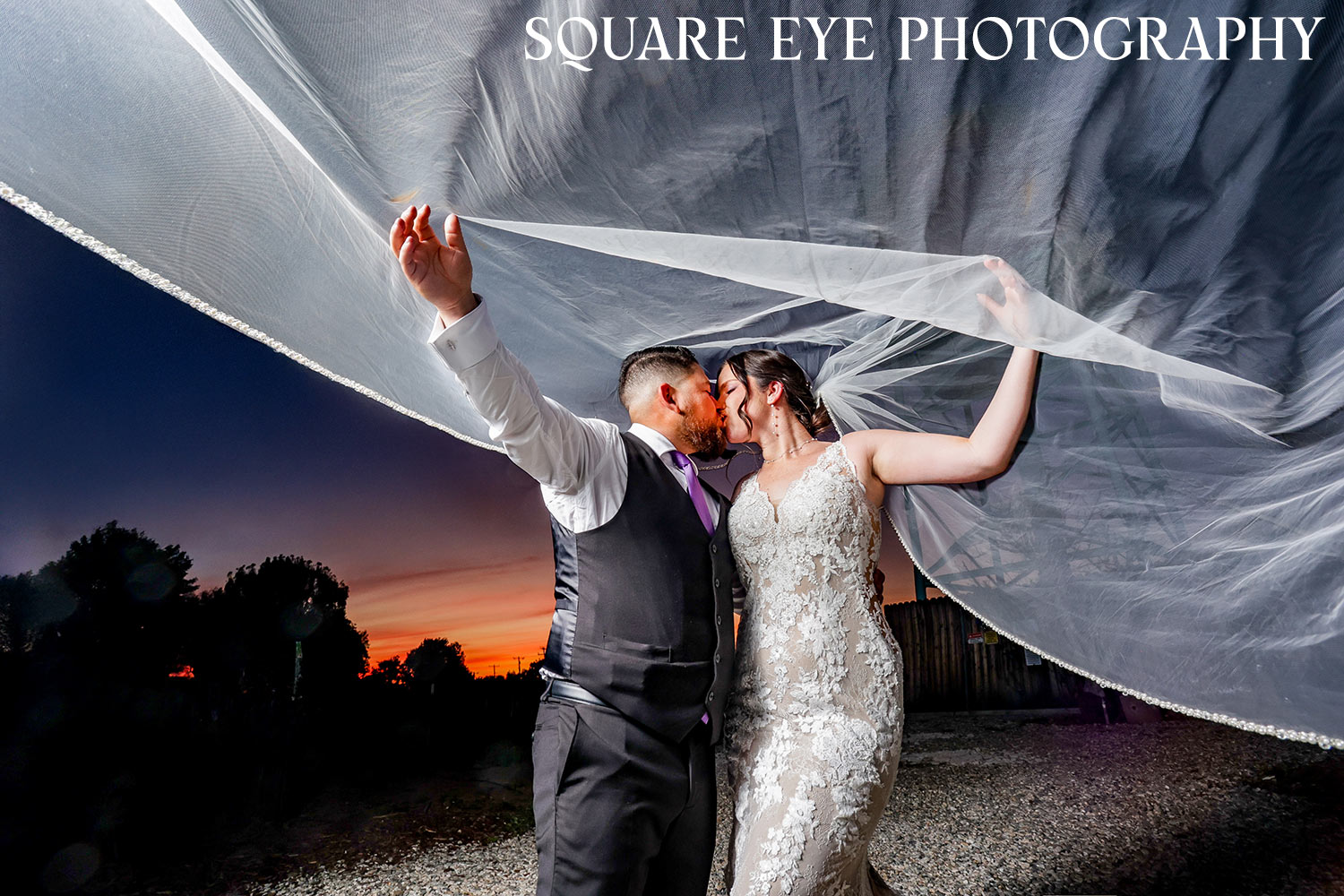
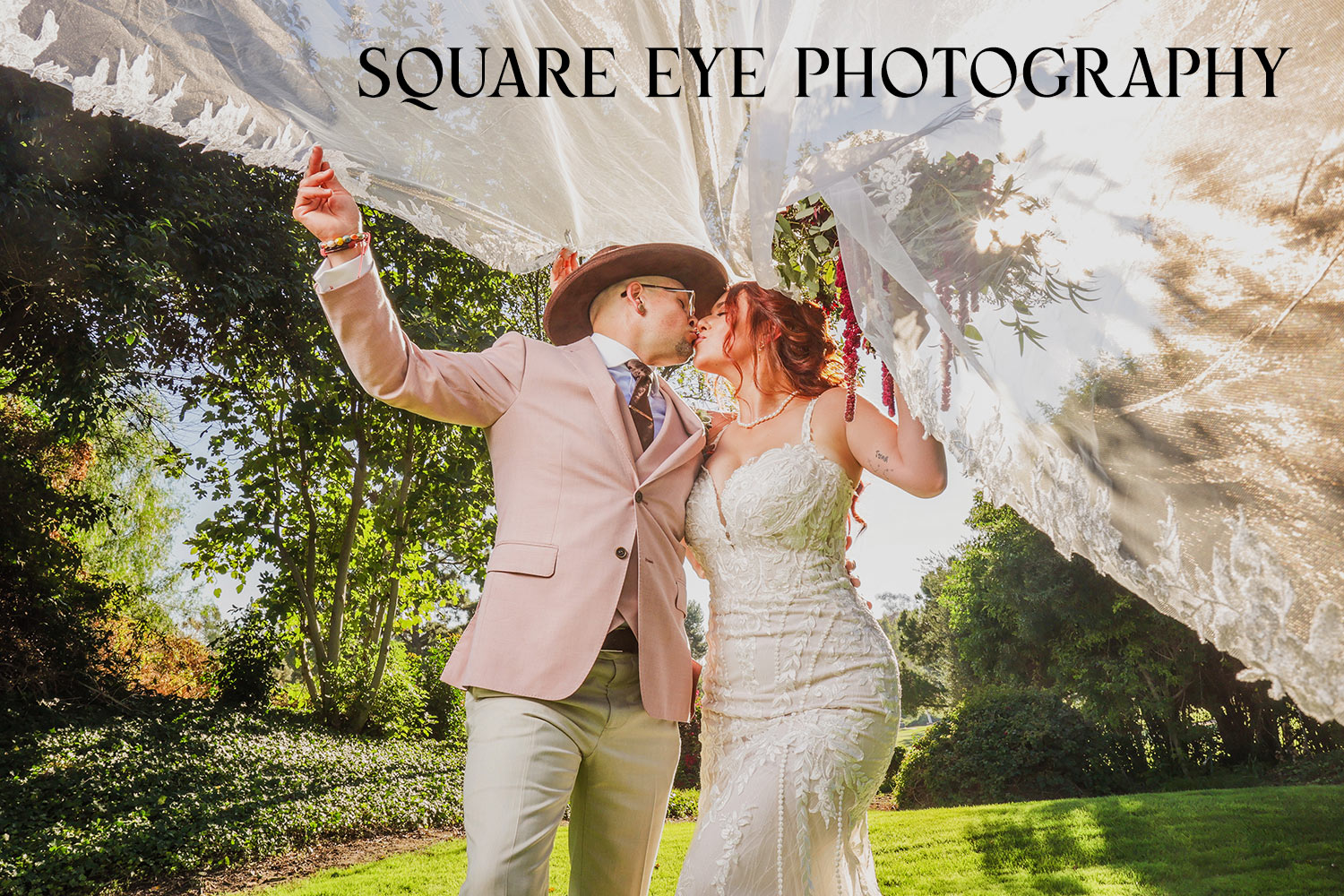
Photographing couples underneath a cathedral veil is one of my favorite techniques, but it's also a little more technically challenging than it looks!
The biggest challenge is getting your off-camera flash to illuminate both faces beautifully while maintaining enough directional light to create dimension and drama.
And believe me, it's surprisingly easy to miss the mark!
Start With the Couple's Pose
I usually begin by having my couple wrap their arms around each other. Then, I ask the groom to hold one side of the veil while the bride holds the other.
This creates a beautiful little space underneath the fabric, allowing the couple to feel connected while giving me a natural frame for the photograph.
However, here's something important to remember: couples naturally tend to lean forward toward each other in this pose.
That small movement can completely change how the light falls across their faces. Suddenly, one face might be beautifully illuminated while the other falls into an unflattering shadow.
Therefore, I always pay close attention to their head positions and make adjustments before taking the photograph.
Have Your Assistant Lift the Veil Behind You
For this technique, I position my assistant directly behind me.
My assistant lifts the veil up and over my shooting position while the bride and groom hold the sides. This creates a beautiful canopy of fabric that surrounds the couple without covering their faces.
Additionally, lifting the veil above the camera allows me to photograph through an opening in the fabric while using the edges to frame the composition.
The result is a soft, floating effect that makes the veil feel almost weightless.
Position Your Off-Camera Flash Carefully
Lighting is where this technique can become tricky.
I typically position my off-camera flash slightly to my left or right, but much closer to the camera's centerline than I would for a more dramatically side-lit portrait.
Why? Because I need the light to reach both faces evenly enough to maintain beautiful skin tones and facial detail.
If I place the flash too far to either side, one person's face can easily fall into shadow, especially when the couple leans towards me since I often ask them to do this.. since I am normally squatting on the ground.
However, I don't want completely flat lighting either!
My goal is to create just enough direction to maintain dimension while keeping both faces beautifully illuminated.
Use a Deeper Sky for an Ethereal Effect
One of my favorite ways to photograph this pose is against a deeper, richly colored evening sky.
Rather than allowing the background to become overly bright, I prefer to preserve those beautiful blues, purples, and deeper sunset tones.
As a result, the illuminated veil stands out against the darker background, creating an almost ethereal, floating appearance.
The contrast between the delicate fabric and the deeper sky can make these photographs absolutely spectacular!
Check Both Faces Before Moving On
Before I finish, I always zoom in and check the lighting on both faces.
It's easy to get distracted by the beautiful shape of the veil and overlook a shadow across someone's eyes or an awkward head position.
Remember, the fabric is there to enhance your photograph. Your couple is still the most important part of the image!
And sometimes, moving your light just a little closer to the center makes all the difference.
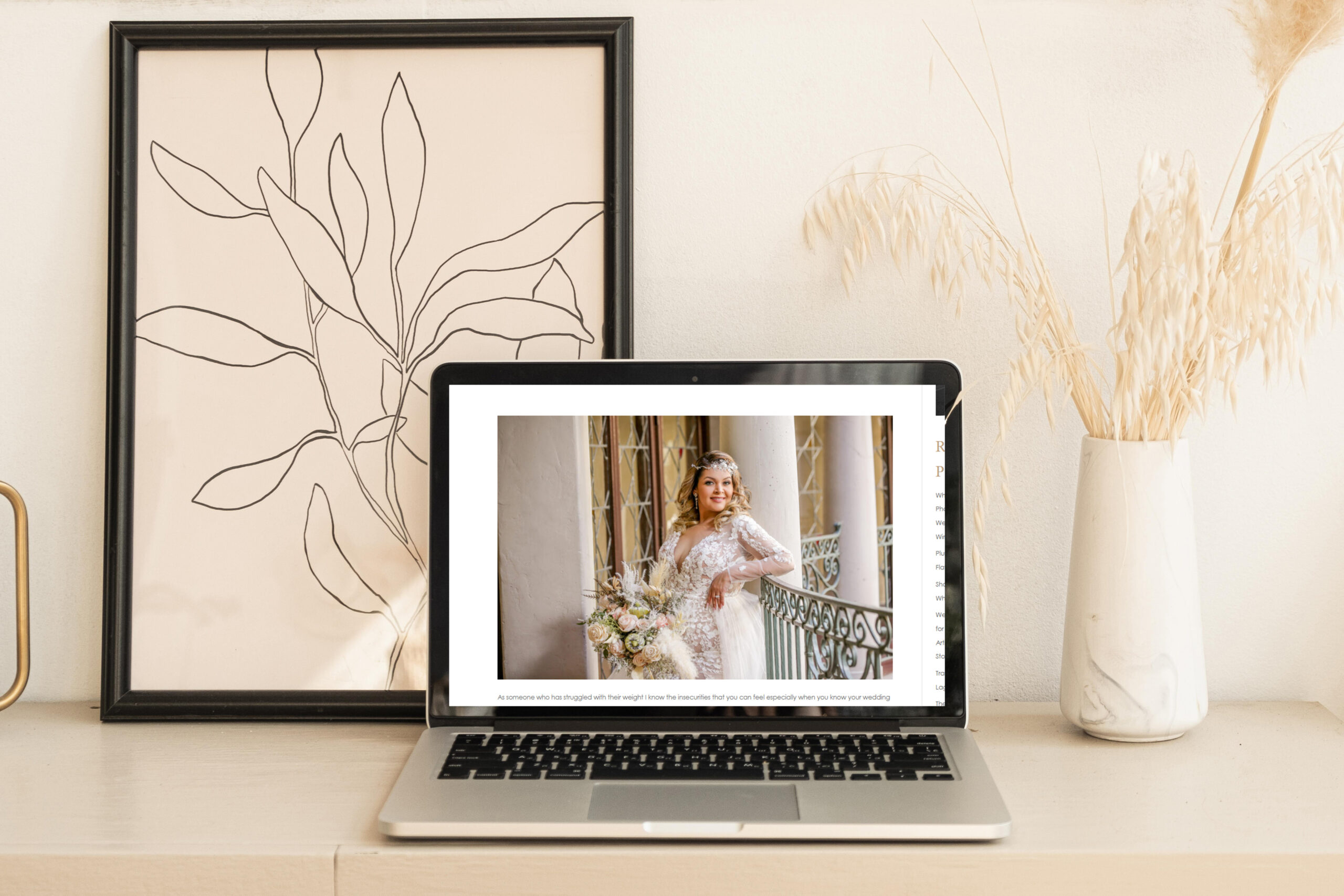
If you like this blog be sure to check ou10 Posing Hints and Tips for Plus Size and Full Figured Brides


Using Architecture to Create Dramatic Bridal Portraits
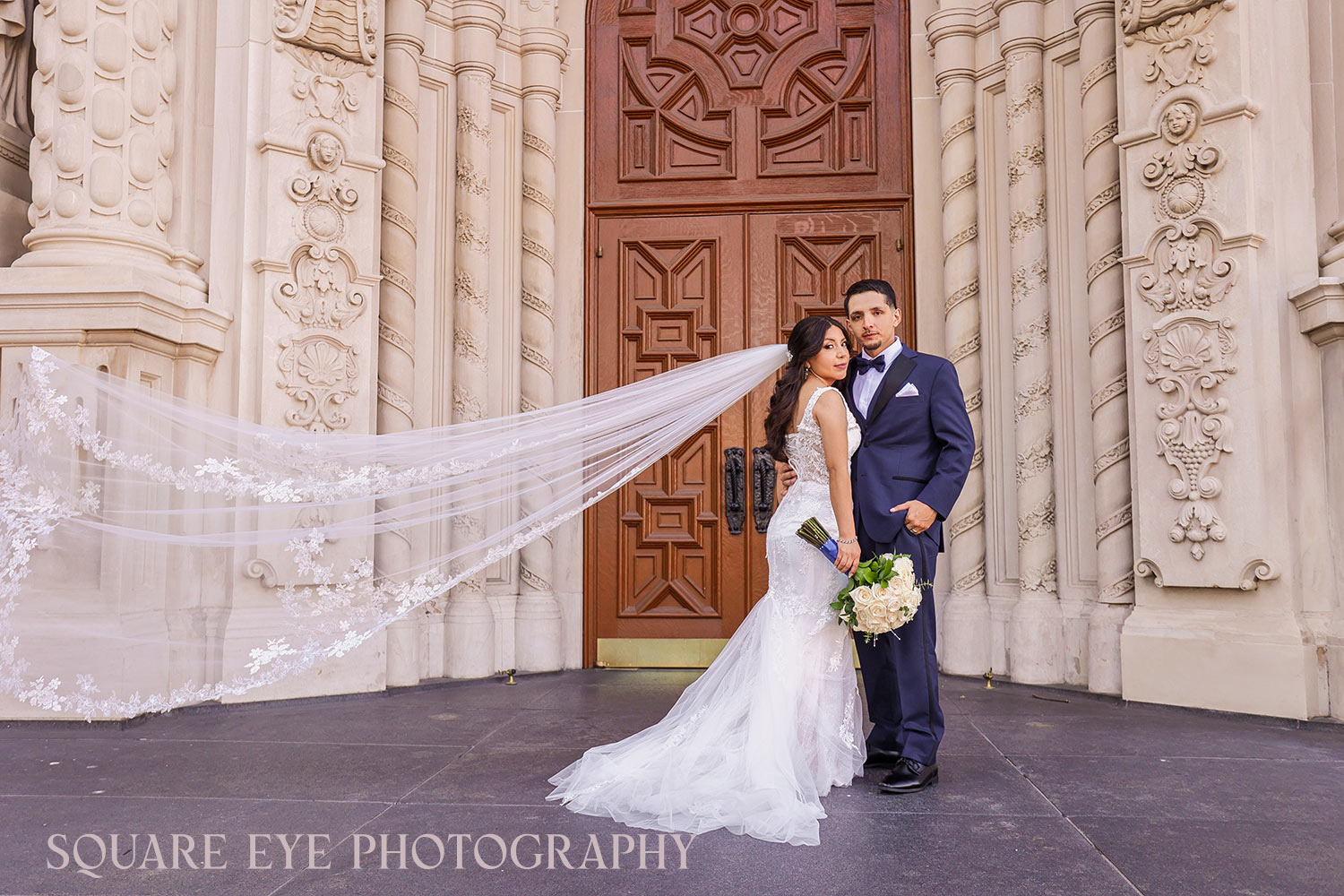
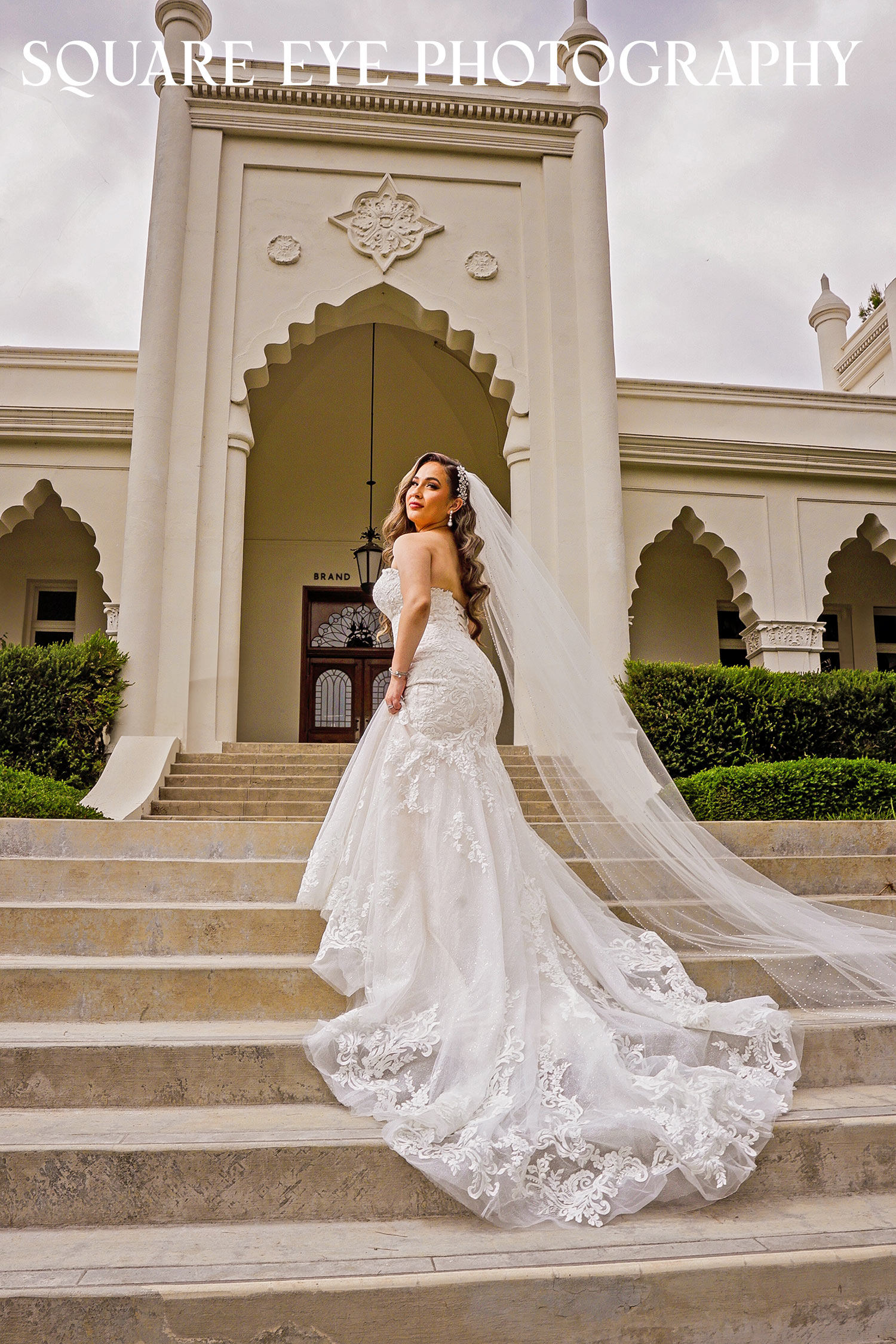
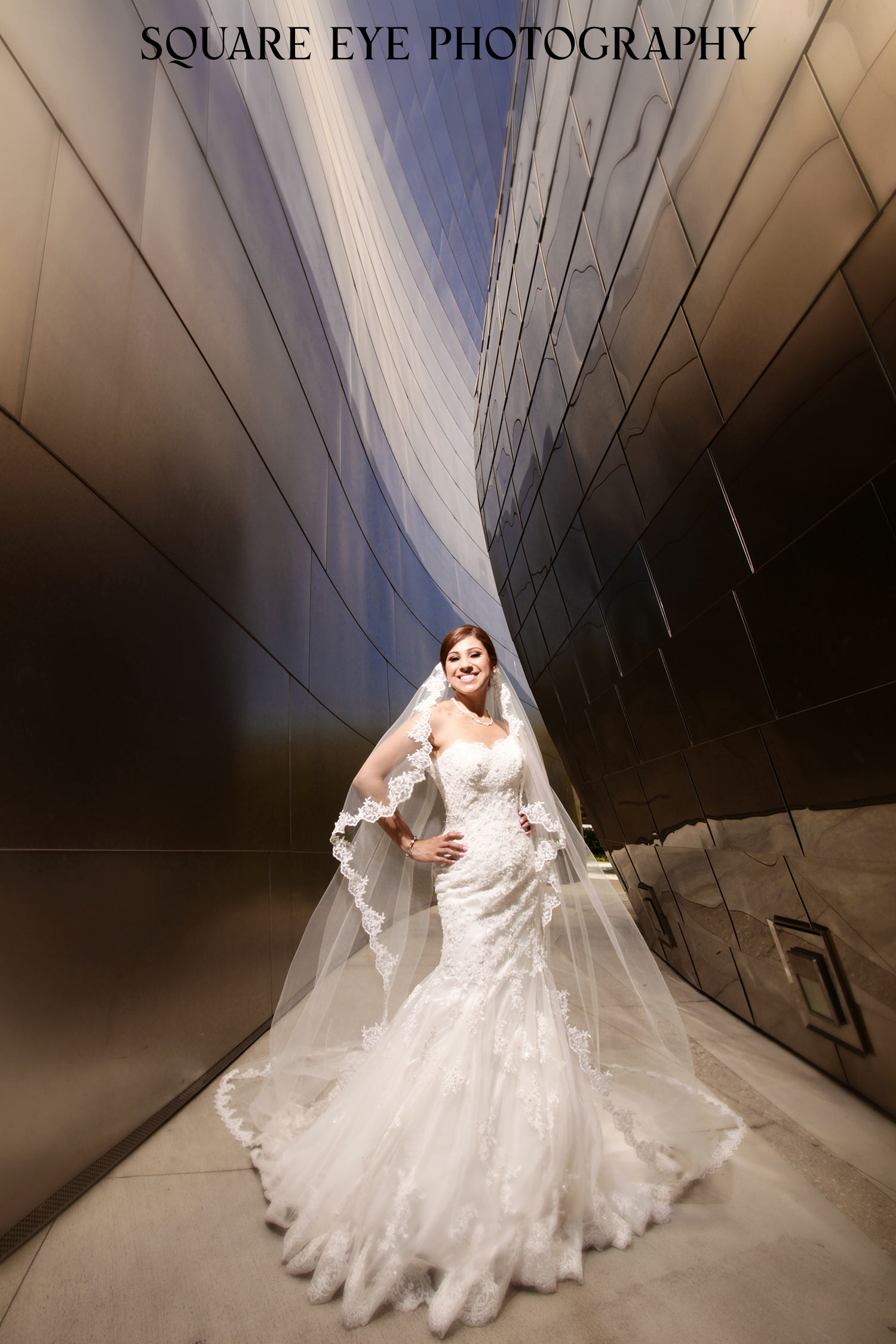
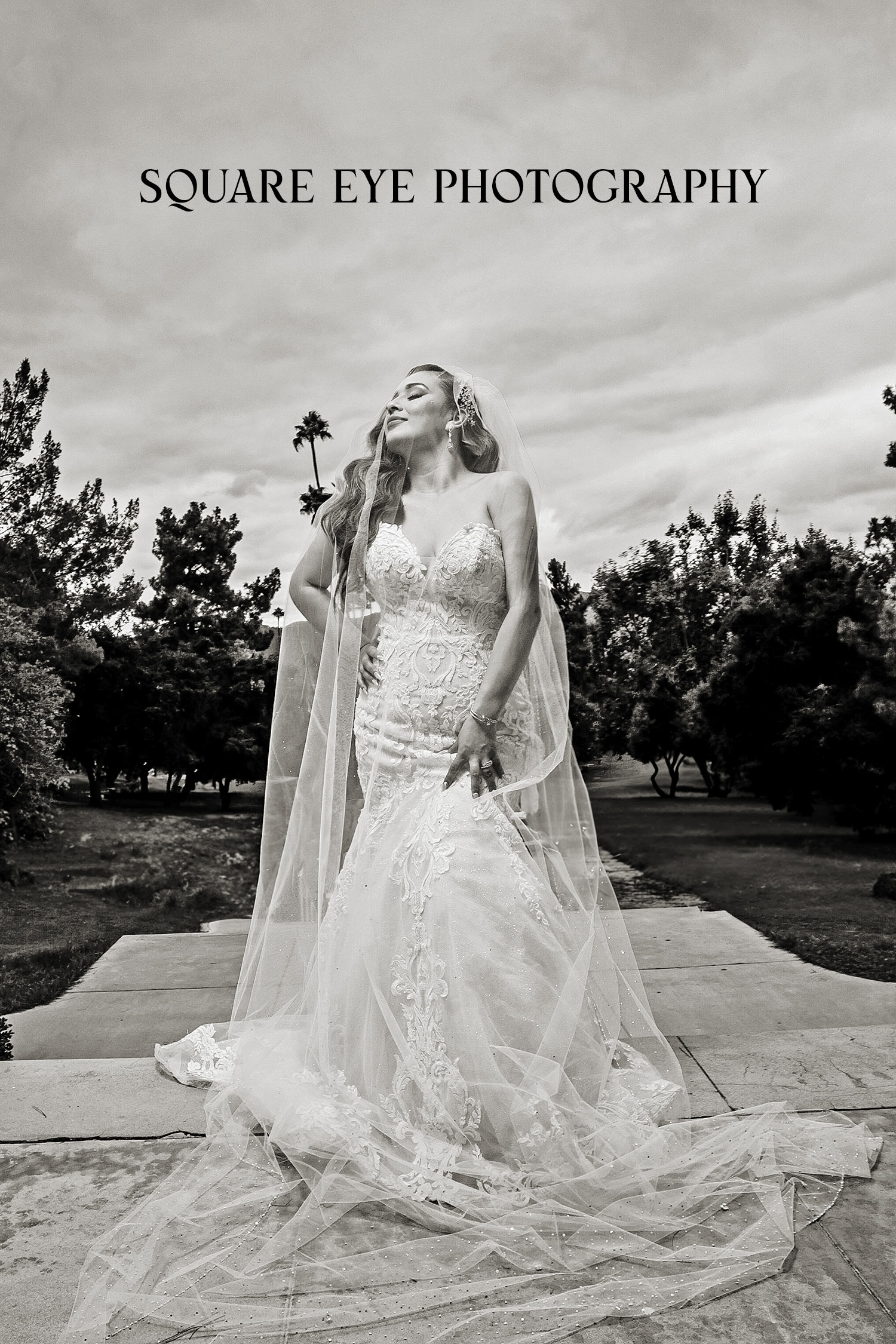
One of my favorite things about cathedral veil photography is how beautifully a long veil can interact with the architecture around you.
Doorways, archways, staircases, columns, and even simple walls can become incredible compositional tools. However, the trick is knowing how to use those elements without overwhelming your bride.
Look for Natural Frames and Leading Lines
Before positioning my bride, I take a moment to study the location.
I'm looking for architectural elements that naturally draw attention toward my subject. For example, a beautiful archway can frame the bride, while a staircase or row of columns can create leading lines that guide the viewer's eye through the photograph.
Then, I consider how the veil can complement those shapes.
A cathedral veil flowing along a staircase can emphasize its length. Alternatively, a veil extending through an archway can create beautiful movement within an otherwise symmetrical composition.
Pose Your Bride Before Arranging the Fabric
As always, I begin with the bride's pose.
I pay attention to her posture, shoulders, hands, and the direction of her body. Depending on the location, I might turn her slightly toward the light or position her at an angle that complements the architecture.
Next, I arrange the veil around her.
Sometimes I'll spread the fabric across the ground to emphasize its length. Other times, I'll allow it to fall naturally along the steps or gently drape it over an architectural feature.
The goal is to create a composition where the bride, veil, and surroundings work together.
Use the Veil to Create Shape and Dimension
One of the easiest ways to add visual interest is to create separation between the bride and the fabric.
For example, rather than allowing the entire veil to lie flat against the ground, I might lift a portion of it to introduce a gentle curve.
Additionally, I watch how the veil interacts with the background. Light-colored fabric can disappear against pale stone or bright walls, so changing your camera angle or lighting can help define its edges

12 Reasons why you should hire me as your plus size specialist wedding photographer

Click Here!
Balancing Off-Camera Flash With Sunset Light
If there's one thing I absolutely love, it's a gorgeous sunset combined with a beautifully illuminated bride and a flowing cathedral veil!
However, photographing this combination can be tricky. You're working with two different light sources: the natural light illuminating your background and the off-camera flash lighting your subject.
The secret is learning how to balance them without losing the beautiful colors in the sky.
Expose for the Sky First
When I'm photographing cathedral veil photography at sunset, I start by evaluating the ambient light.
I want to preserve the beautiful colors in the sky rather than allowing the background to become overly bright or washed out.
Therefore, I establish my ambient exposure before adding flash. Depending on the conditions, I may deliberately make the sky appear a little darker than it looks to my eyes.
This gives me those gorgeous, rich sunset colors that create such a dramatic background.
Add Off-Camera Flash to Illuminate Your Couple
Once I'm happy with the background exposure, I bring in my off-camera flash.
My goal is to illuminate the couple beautifully while maintaining the atmosphere of the sunset.
I adjust the flash power and position until I have the balance I'm looking for. Sometimes I want soft, flattering light across both faces. Other times, I'll position the light farther to one side to create more dramatic shadows and dimension.
However, I always pay attention to how the light interacts with the veil.
Watch How the Light Hits the Fabric
A cathedral veil can catch light in absolutely beautiful ways!
For example, when the flash illuminates the fabric from the side, it can help reveal delicate lace details and create separation from the background.
Additionally, a veil positioned against a darker sky often becomes much more visible than one photographed against a bright, pale background.
I love that contrast because it gives the fabric an almost weightless appearance.
However, too much flash can make the veil look overly bright and cause delicate details to disappear.
Therefore, I always check both the couple's exposure and the highlights in the fabric before moving on.
Make Small Adjustments Until Everything Works Together
One of the biggest lessons I've learned over the years is that beautiful lighting often comes down to making small adjustments.
Moving your flash a few feet, changing its angle, or slightly adjusting your ambient exposure can completely transform the photograph.
Don't be afraid to experiment!
The goal isn't simply to make everything bright. It's to create a photograph where the couple, the veil, and the sunset all work together beautifully.
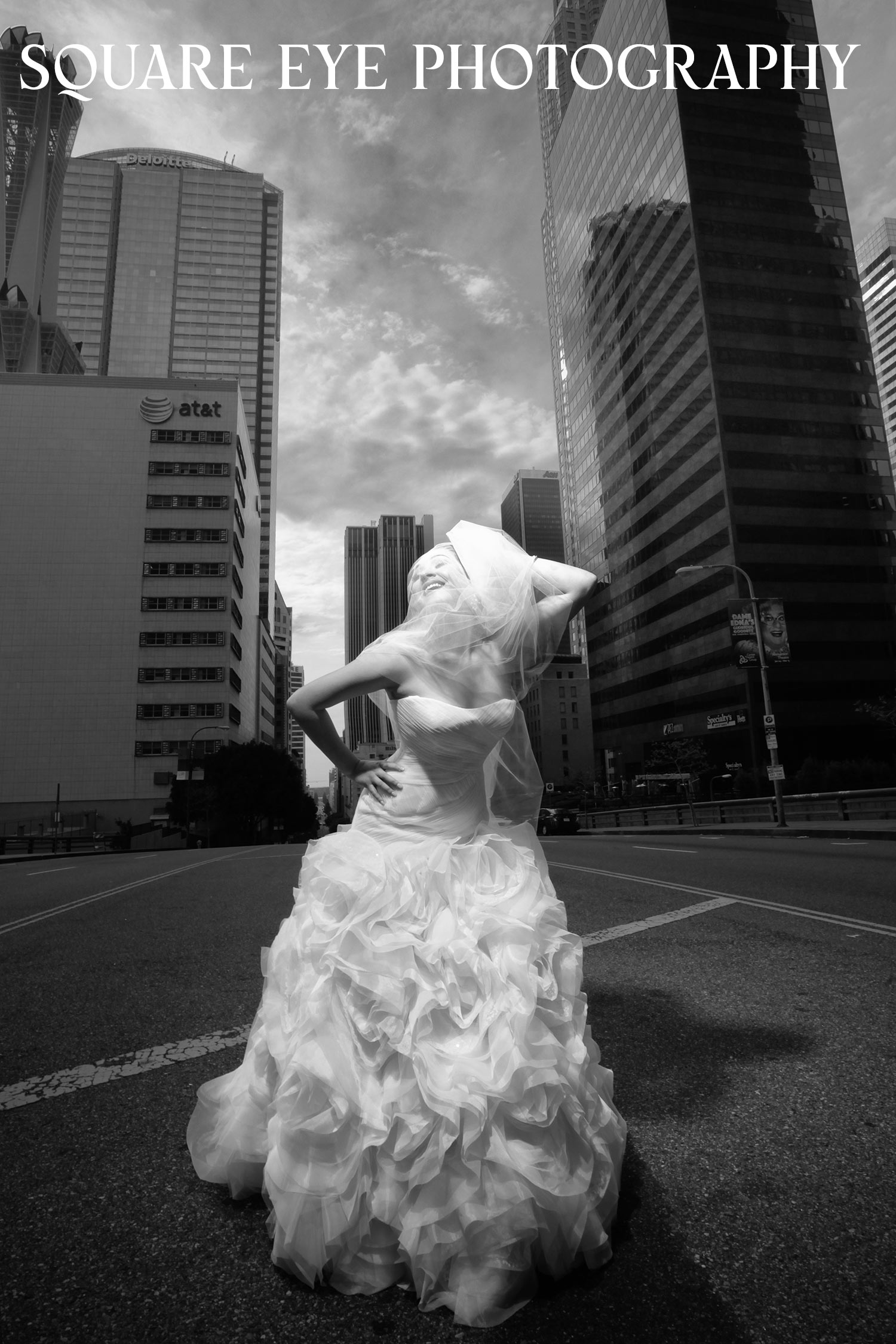
Photographing the Bride From Underneath the Veil
One of my favorite creative cathedral veil photography techniques is getting underneath the veil with the bride!
Rather than photographing her from outside the fabric, I position myself beneath it, allowing the veil to surround us and create a beautiful, intimate frame.
I begin by posing the bride, paying attention to her shoulders, chin, and the direction of her face. Then, I look for ways to incorporate the soft fabric into the composition without distracting from her expression.
Lighting is especially important here. I want the bride's face beautifully illuminated while allowing the veil to create softness and dimension around her.
The result can feel romantic, dreamy, and wonderfully personal. And sometimes, getting the perfect photograph means crawling underneath several feet of tulle. Just another glamorous day in the life of a wedding pho
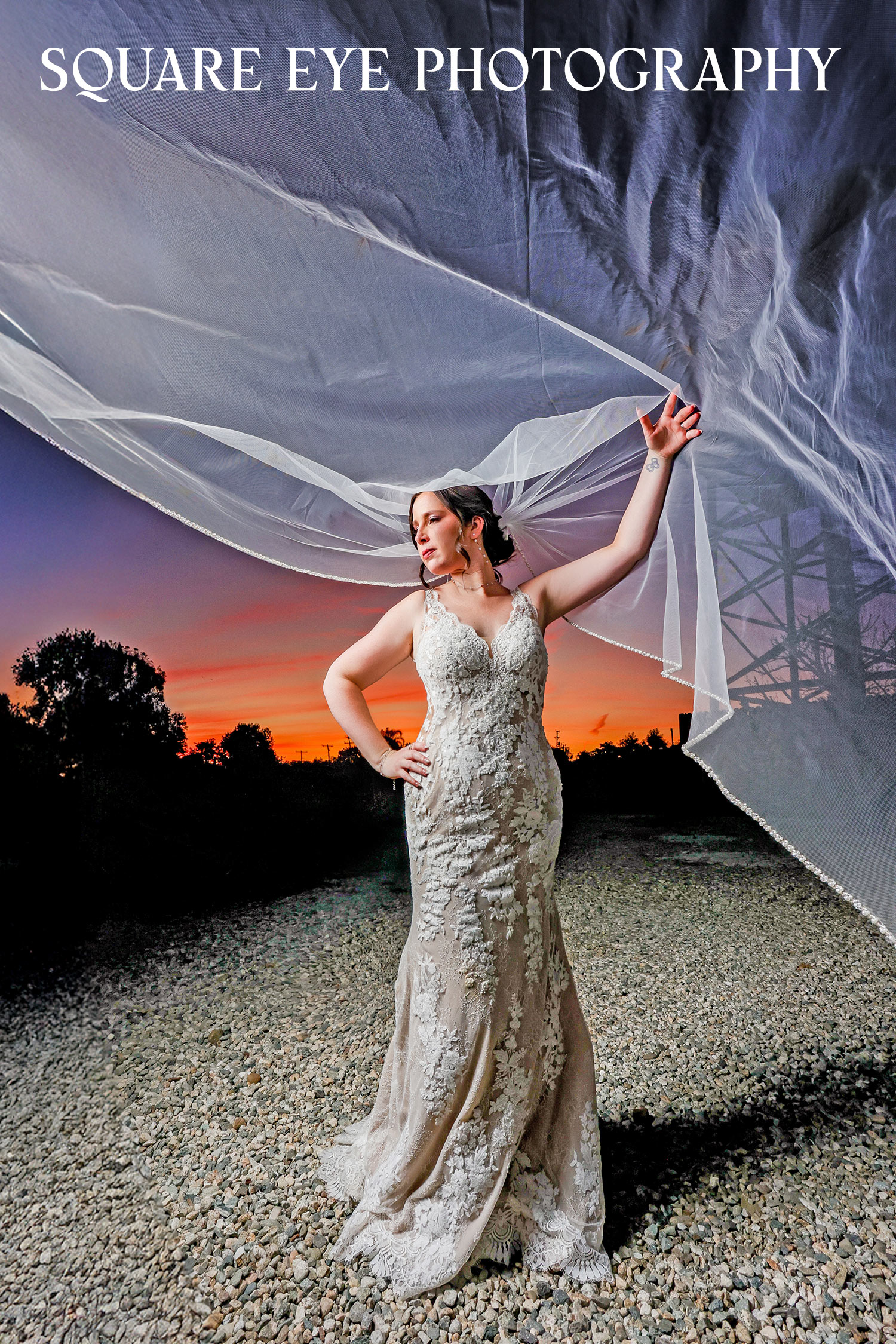

If you like this blog be sure to check out this one ...what your wedding photographer should be doing for you!

Click Here!
The Romantic Couple Under the Veil
There's something incredibly romantic about photographing a bride and groom wrapped together beneath a cathedral veil!
For this pose, I have the couple embrace, with the bride holding one side of the veil and the groom holding the other. Meanwhile, my assistant stands behind me and lifts the fabric above us, creating a beautiful canopy.
I position my off-camera flash slightly to the left or right of my camera, keeping it relatively close to the center so that both faces receive flattering light.
I especially love photographing this pose against a deeper evening sky. The contrast makes the illuminated fabric appear almost weightless, creating a dreamy, ethereal effect.
Just remember that couples naturally lean toward each other in this position, so check that your lighting still reaches both faces before taking the photograph.
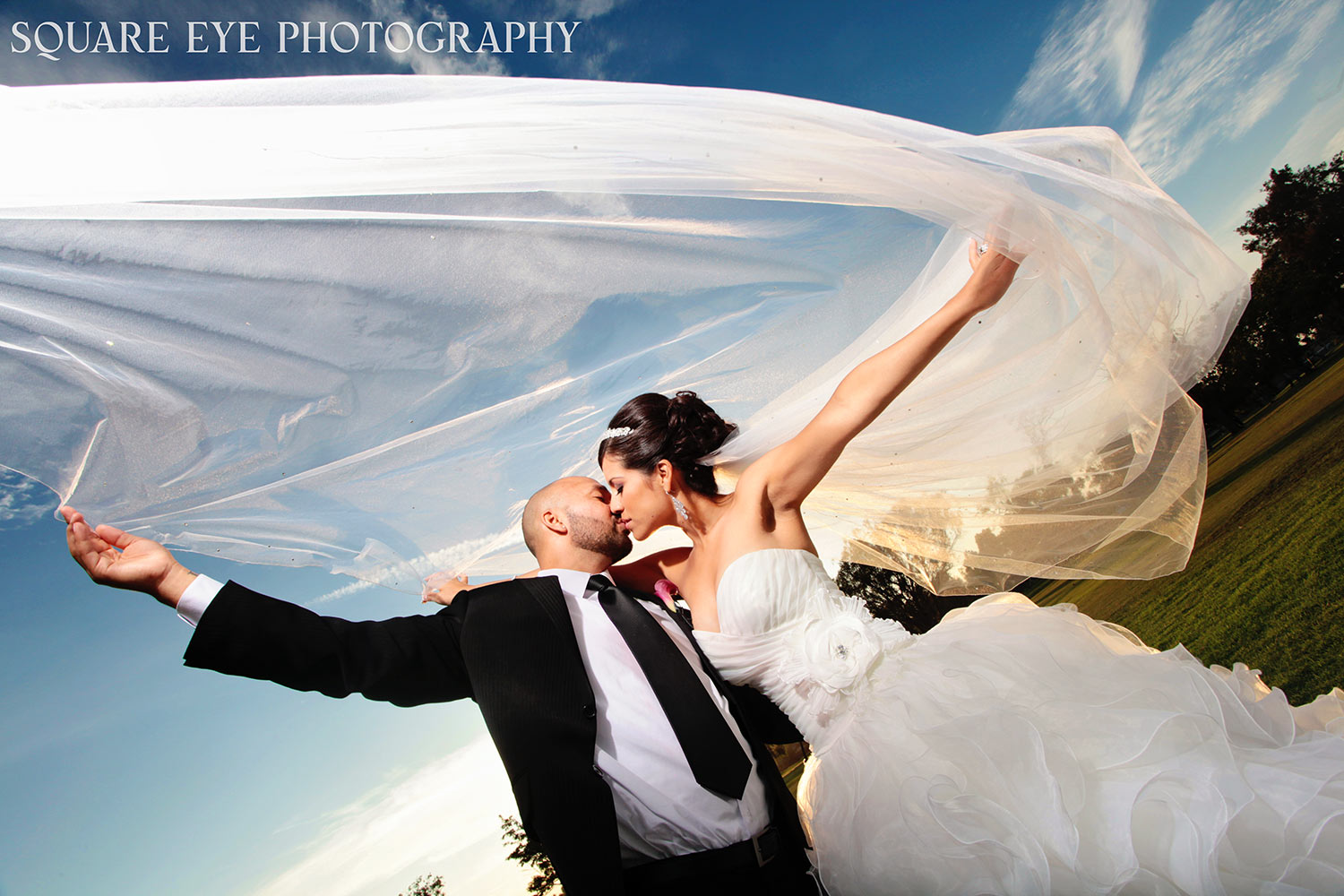
The Classic Flying Veil Toss
I know we've already talked about this technique quite a bit, but I couldn't leave it out of my favorite cathedral veil poses!
This is one of those photographs I create at almost every wedding. I absolutely love the movement, romance, and drama that a flying veil adds to a portrait.
And honestly, after more than 30 years of photographing weddings, I still get excited when that veil catches the air just right!
It's a classic for a reason, and I don't see myself getting tired of it anytime soon. ❤️
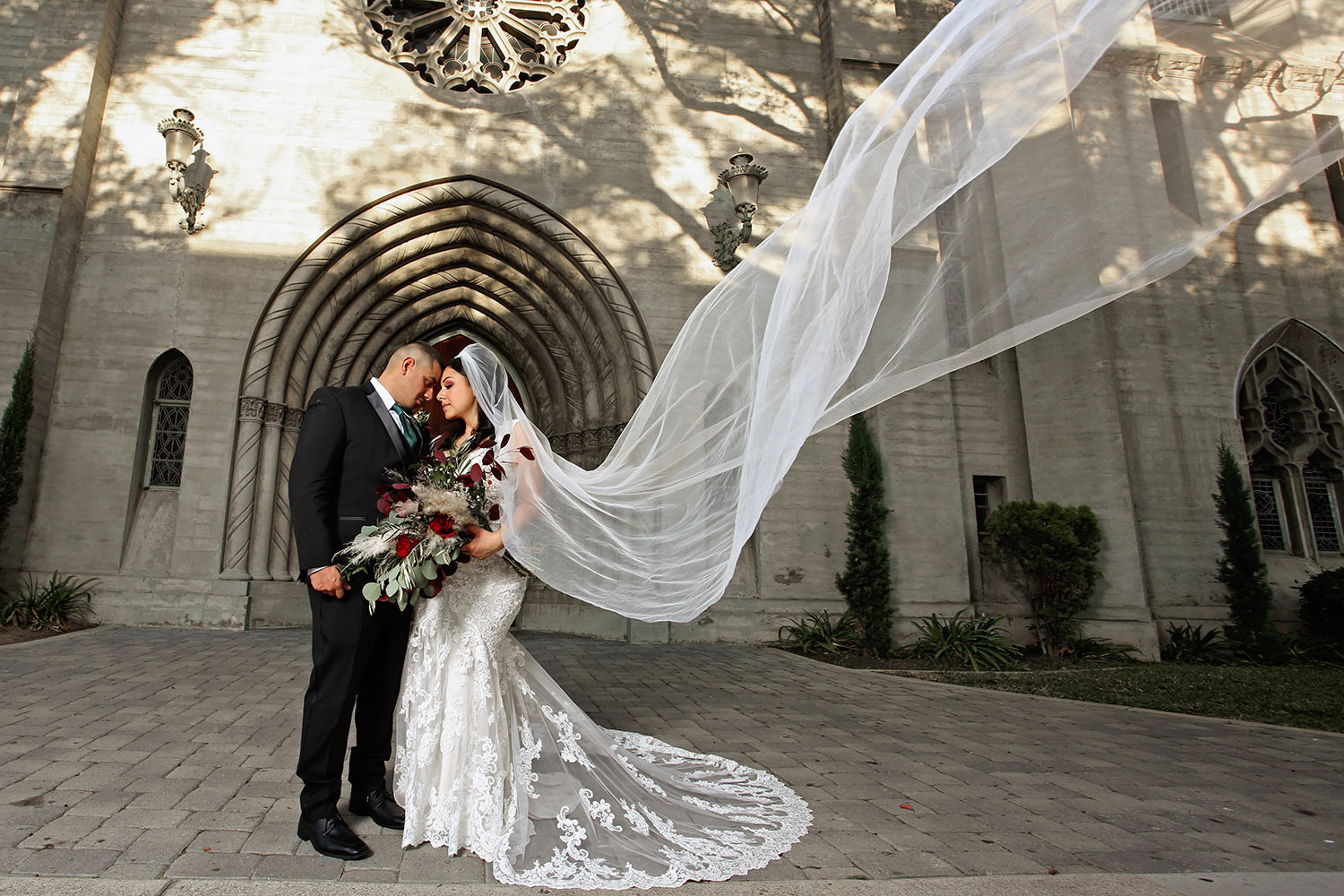
The Dramatic Fashion-Inspired Bridal Portrait
Sometimes I want a bridal portrait that feels less like a traditional wedding photograph and more like something you'd see in the pages of Vogue!
For this technique, I position the cathedral veil over and around the bride, creating a dramatic frame with the fabric. Then, I place my off-camera flash high above her to create directional light, sculpted shadows, and beautiful dimension.
Unlike my softer, romantic portraits, I'm deliberately looking for a little more contrast and drama here.
I pay particular attention to the bride's chin, shoulders, and expression. A subtle change in her pose can completely transform the mood of the photograph.
And don't be afraid to experiment with the height and angle of your light! The goal is to create something bold, elegant, and a little unexpected.
After all, who says every bridal portrait has to look traditional?
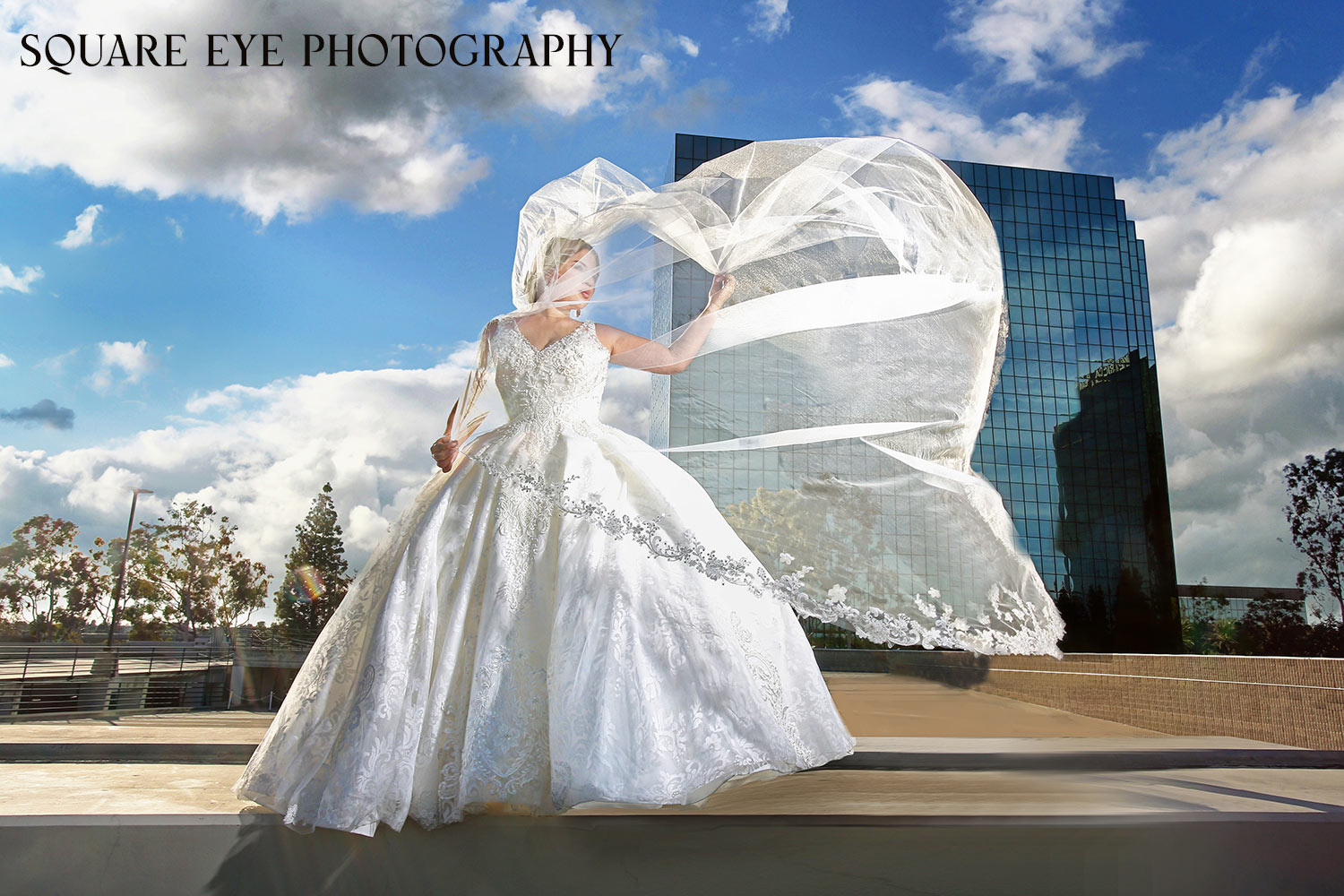
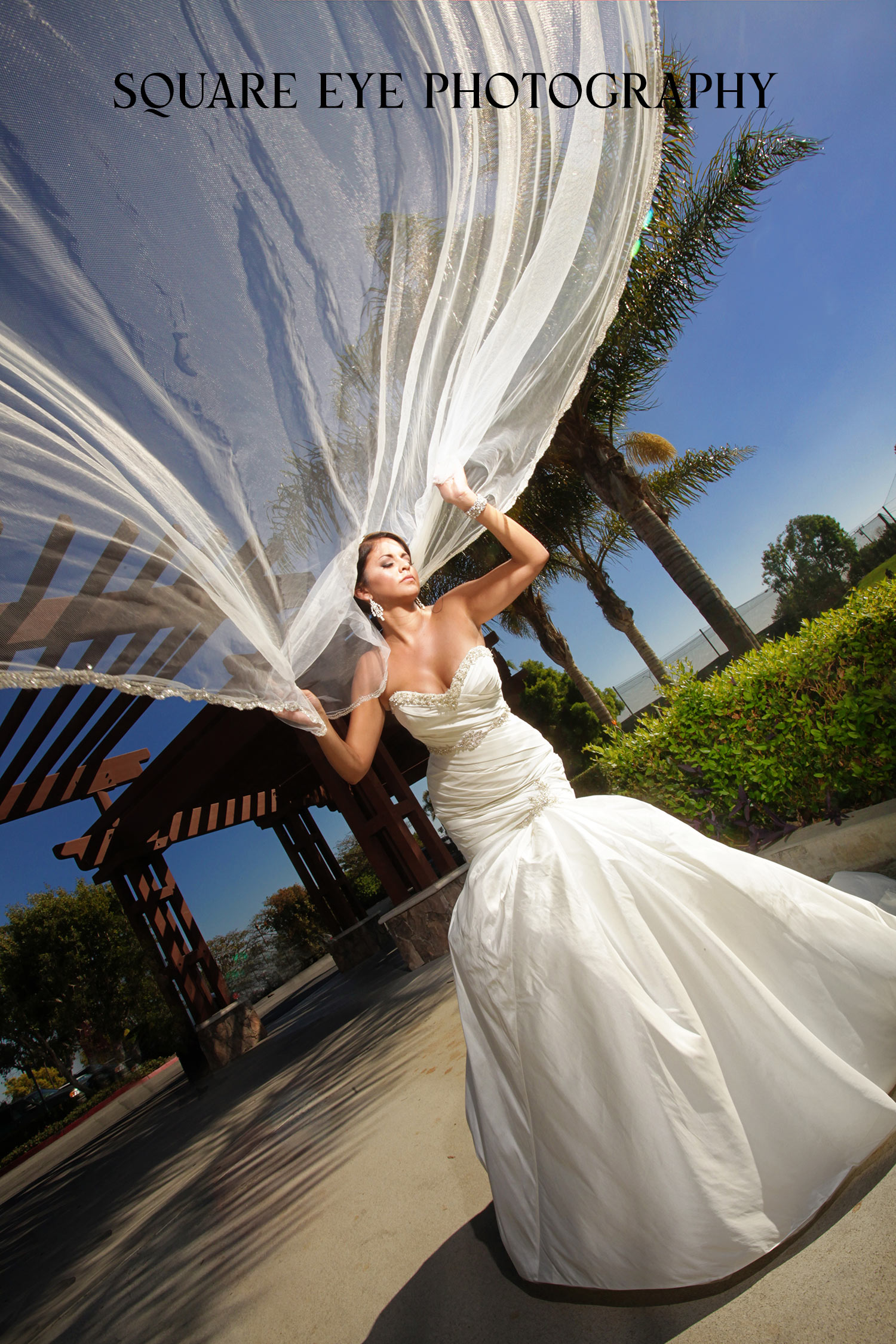
More Dramatic Cathedral Veil Photography Inspiration
And because I can never resist getting a little creative with a cathedral veil, here are a few more of my favorite dramatic bridal portraits!
Some are romantic, some are bold and fashion-inspired, and others are simply the result of experimenting with light, movement, and a whole lot of tulle.
I hope these photographs inspire you to try something a little different at your next wedding. Remember, there are no rules that say a veil has to be photographed the same way every time.
Have fun, experiment, and create something that's uniquely yours!
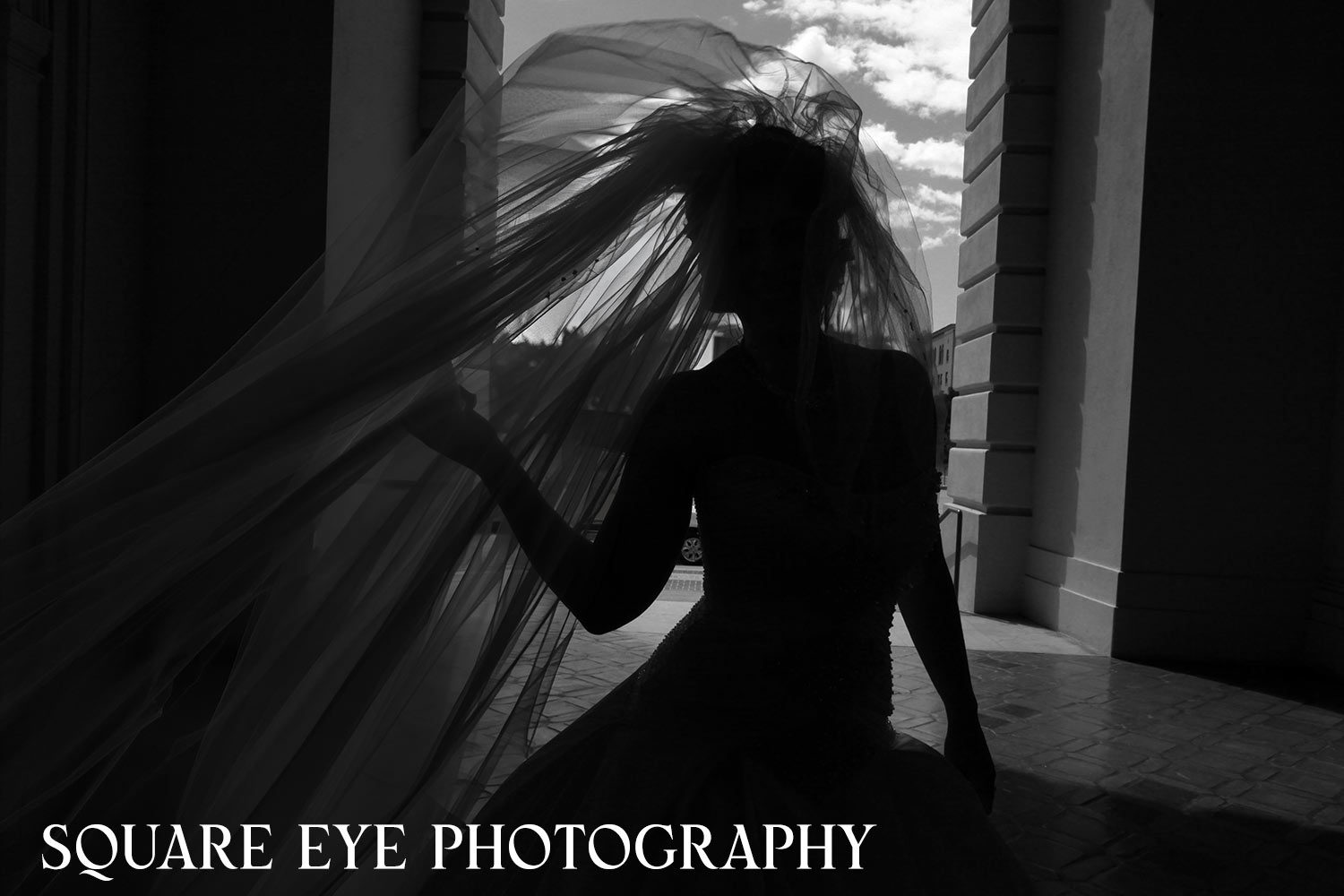
Windswept Cathedral Veil Photography
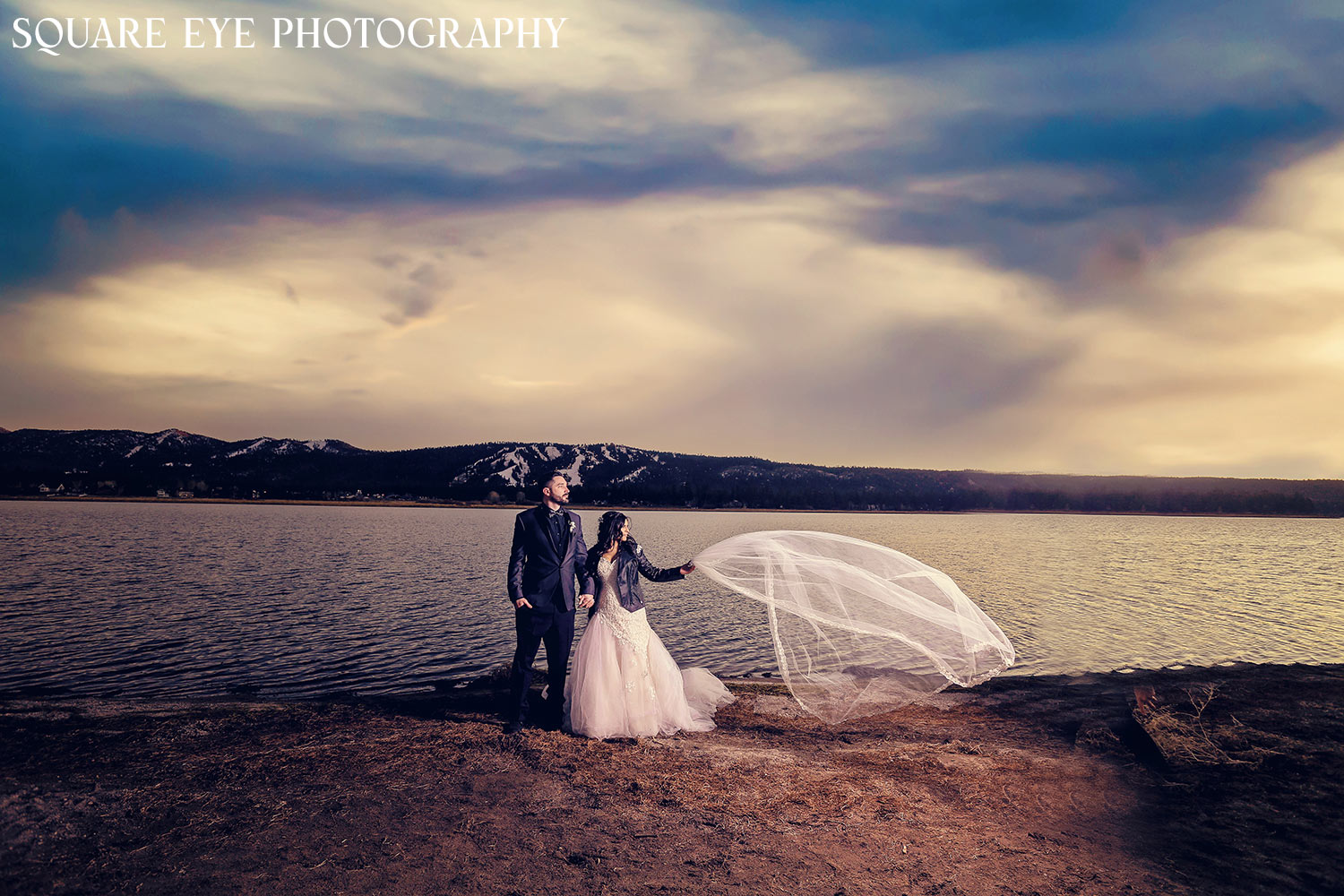
Sometimes the most beautiful veil photographs happen when Mother Nature decides to lend a hand!
I absolutely love photographing cathedral veils on windy days. There's something so romantic and dramatic about watching yards of delicate fabric dance through the air.
Rather than fighting the wind, I look at its direction and position my bride or couple so the veil flows into the composition instead of covering their faces.
Of course, wind can be unpredictable! Sometimes the fabric creates the most spectacular shape imaginable, and two seconds later, it's wrapped around someone's head. 😂
The trick is to be patient, anticipate the movement, and keep photographing as the veil changes shape.
And don't be afraid to reposition yourself! Sometimes moving just a few feet gives you a completely different perspective on the same beautiful windswept moment.
These are some of my favorite photographs because they feel spontaneous, romantic, and wonderfully alive!
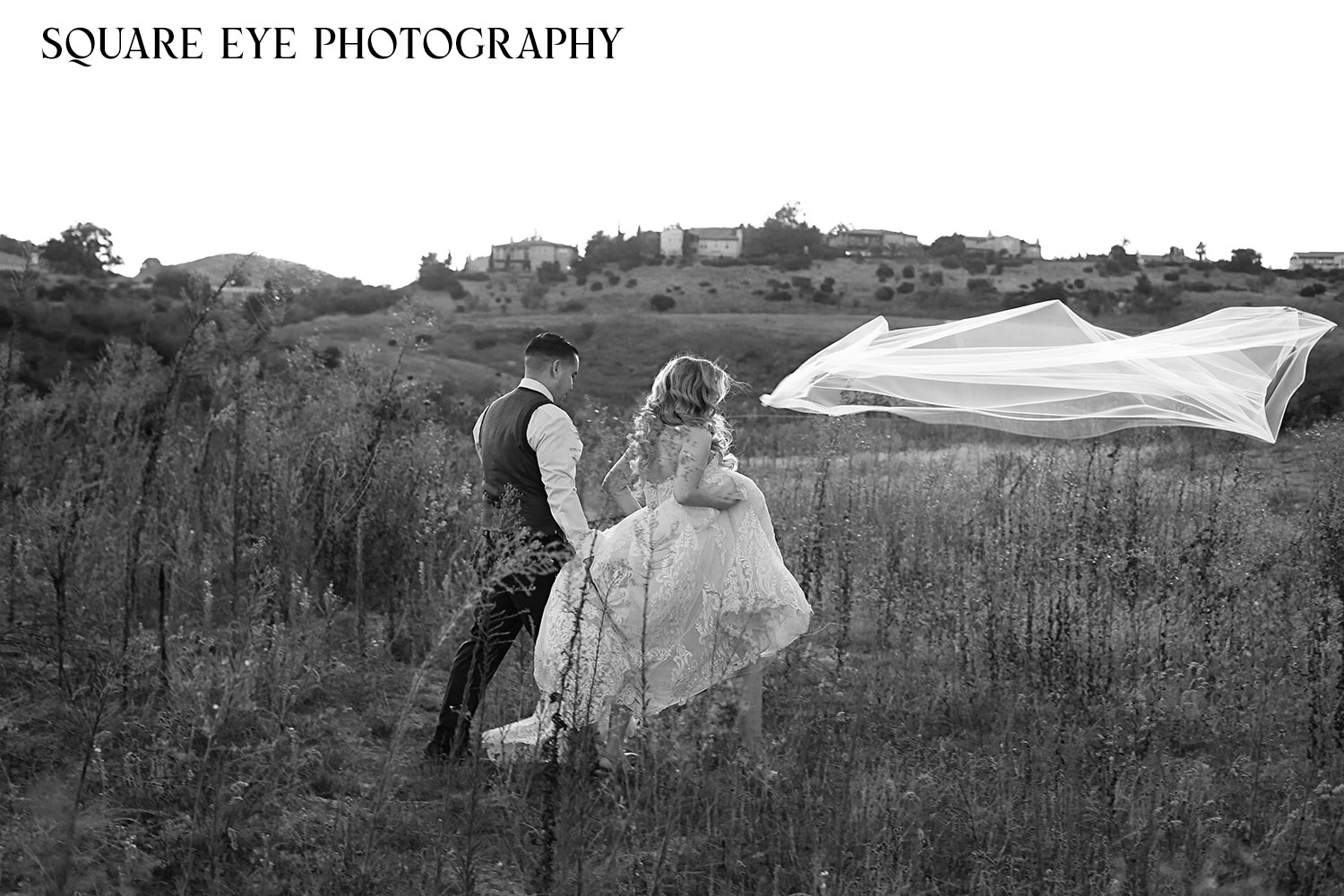
Peekaboo! Creative Veil Framing Ideas
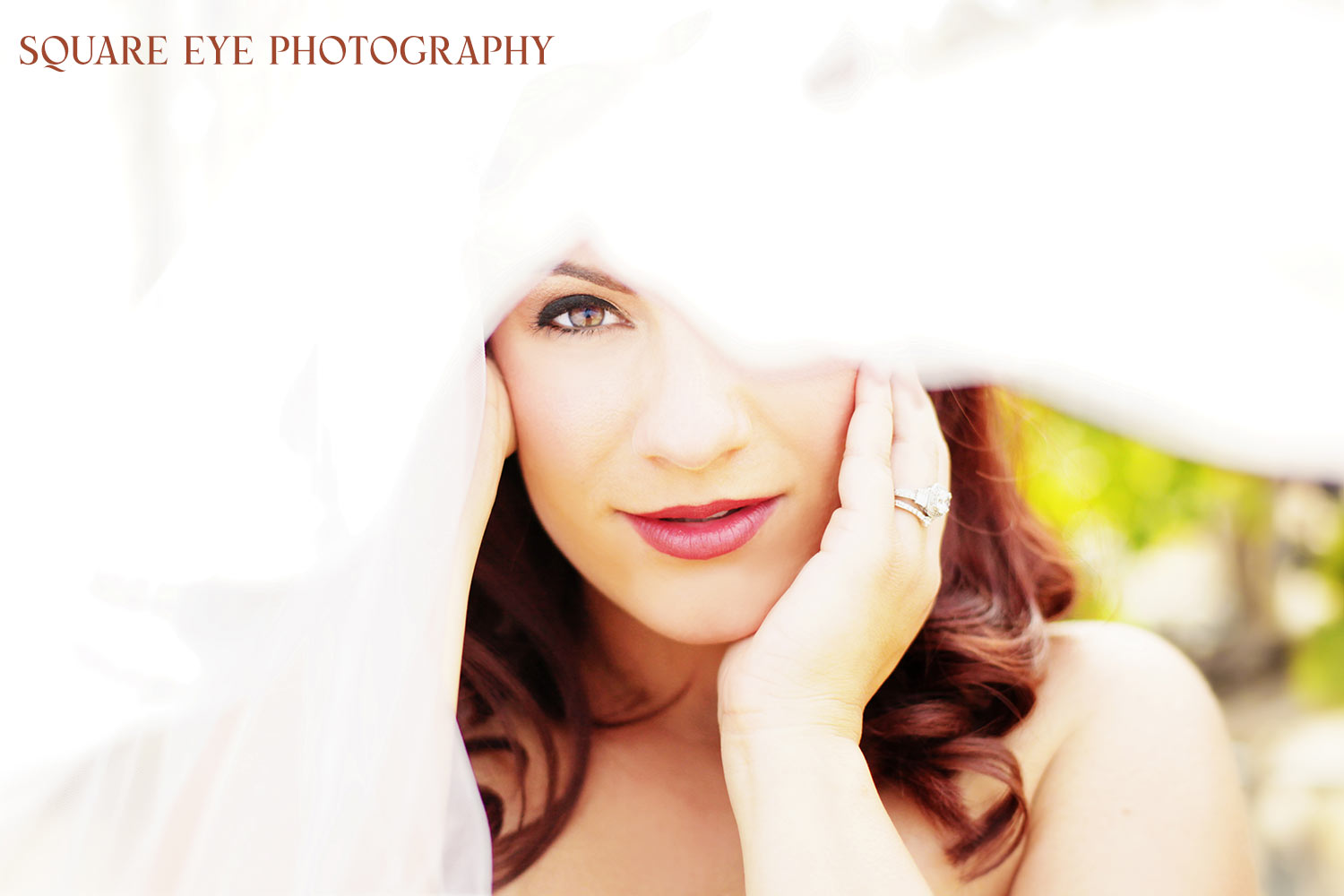
Who says you have to show the entire face to create a beautiful wedding portrait?
One of my favorite ways to get creative with a cathedral veil is to play a little peekaboo!
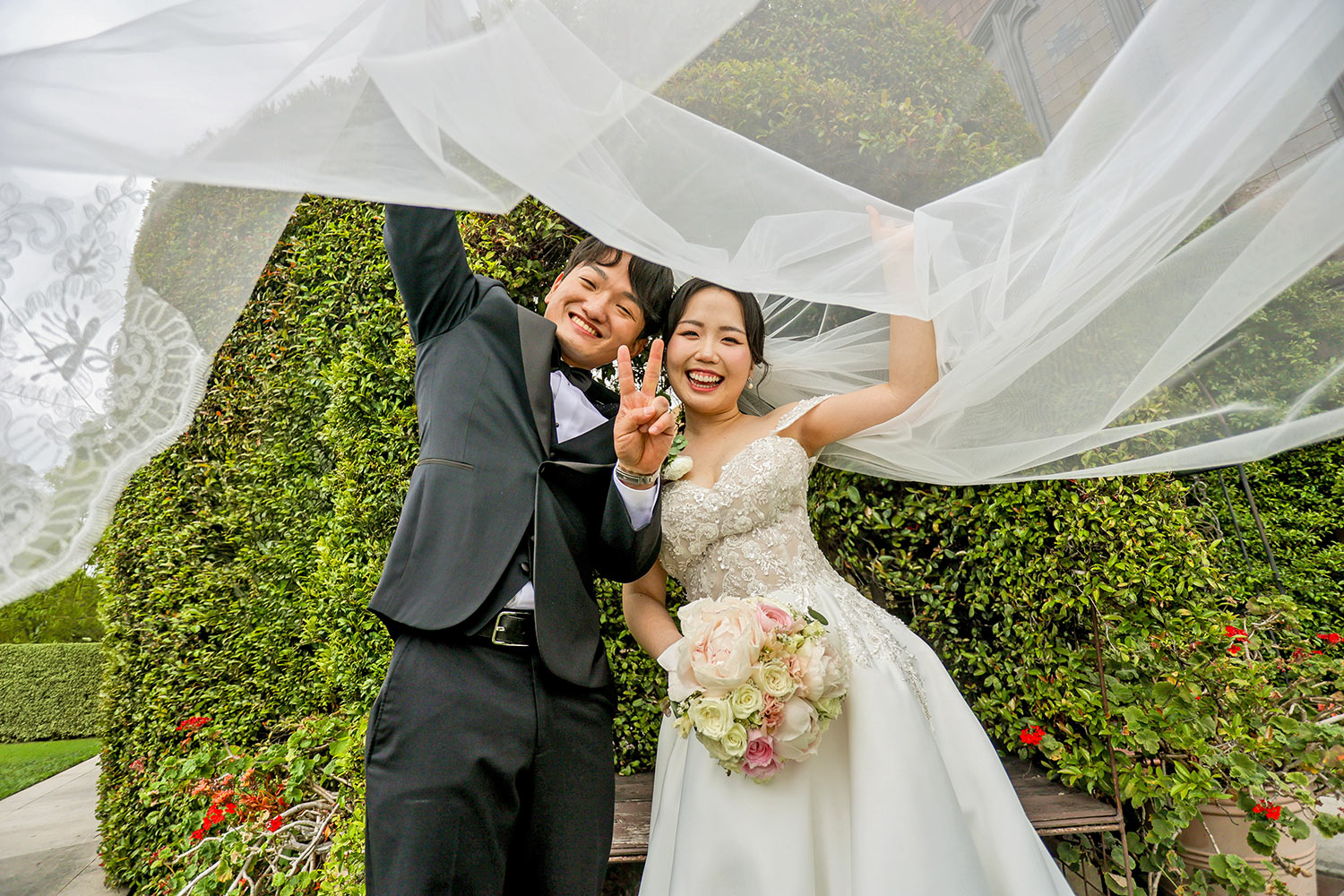
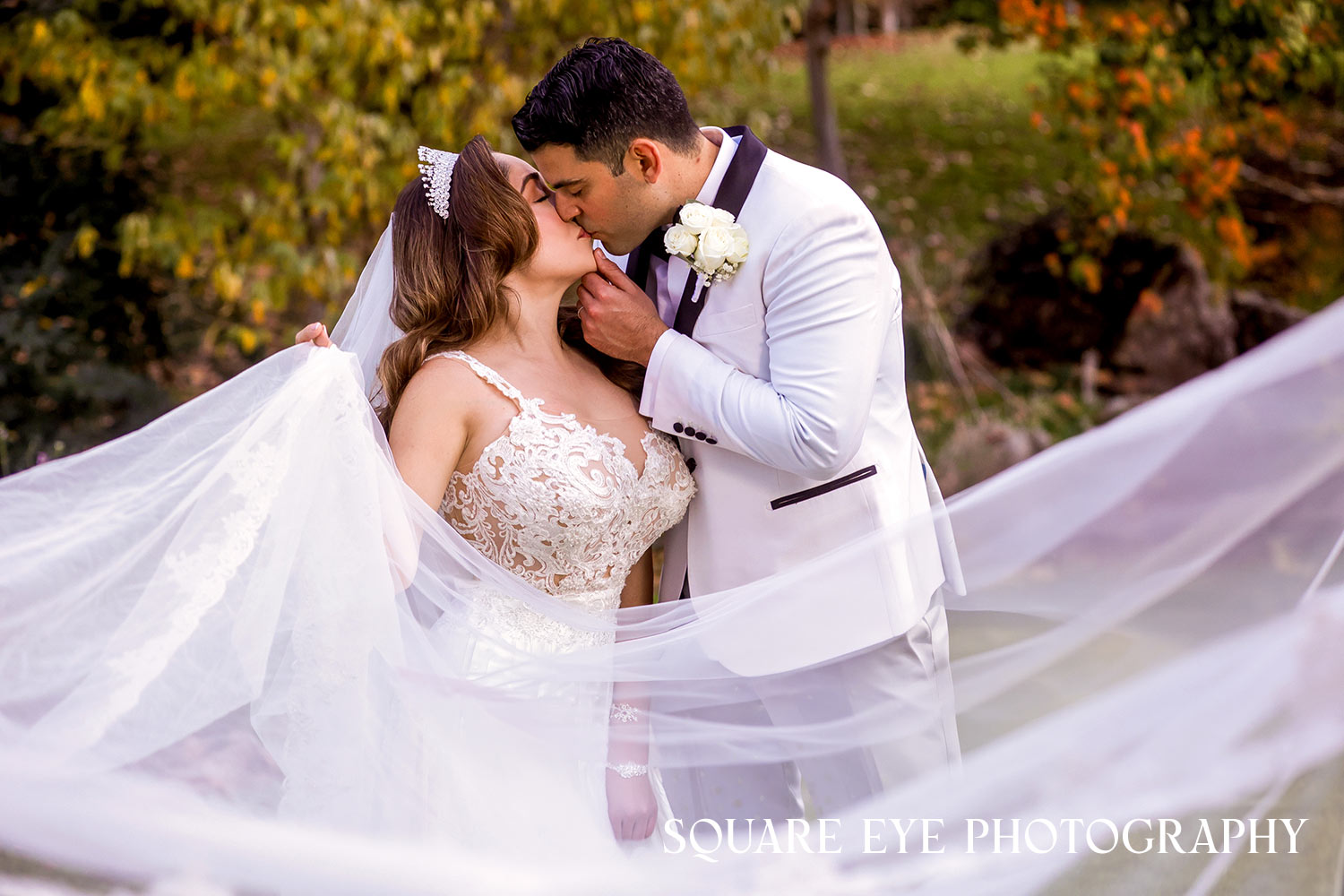
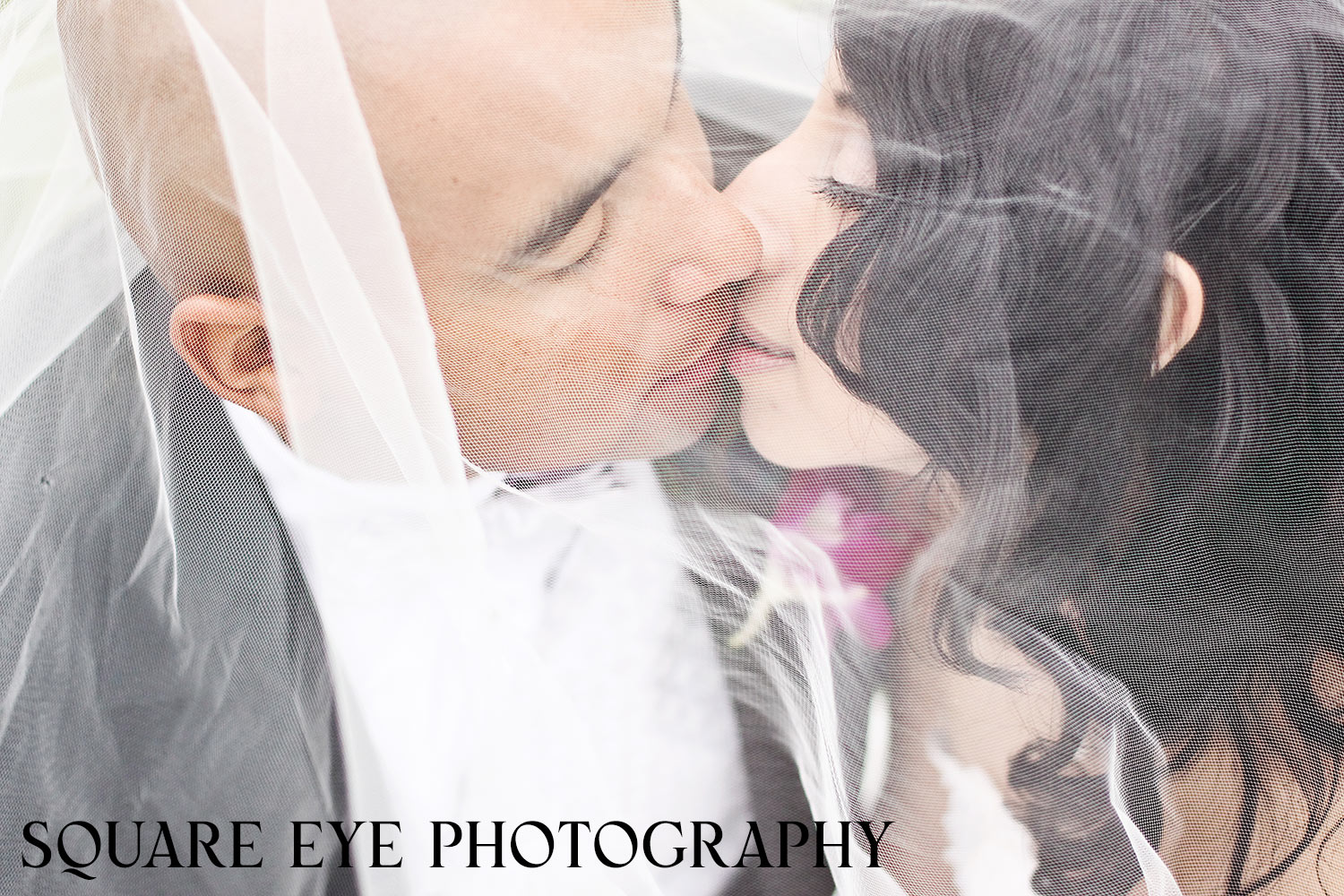
Sometimes I'll position the fabric so that only one of the bride's eyes is visible, creating a mysterious, intimate portrait. Other times, I'll use the veil to partially frame a couple as they kiss, allowing the soft fabric to sweep across the foreground.
The trick is to be intentional about what you're revealing and what you're hiding. I want the viewer's eye to go directly to the expression or connection I'm photographing.
I also pay close attention to my focus. When there's fabric between my lens and my subjects, I make sure the camera focuses on the eye or faces rather than the veil itself.
These photographs are a wonderful reminder that sometimes what you don't show can be just as beautiful as what you do!
And honestly, who doesn't love a little peekaboo? 😂
The Romantic Draped Veil Portrait
Sometimes the most romantic photographs are also the simplest!
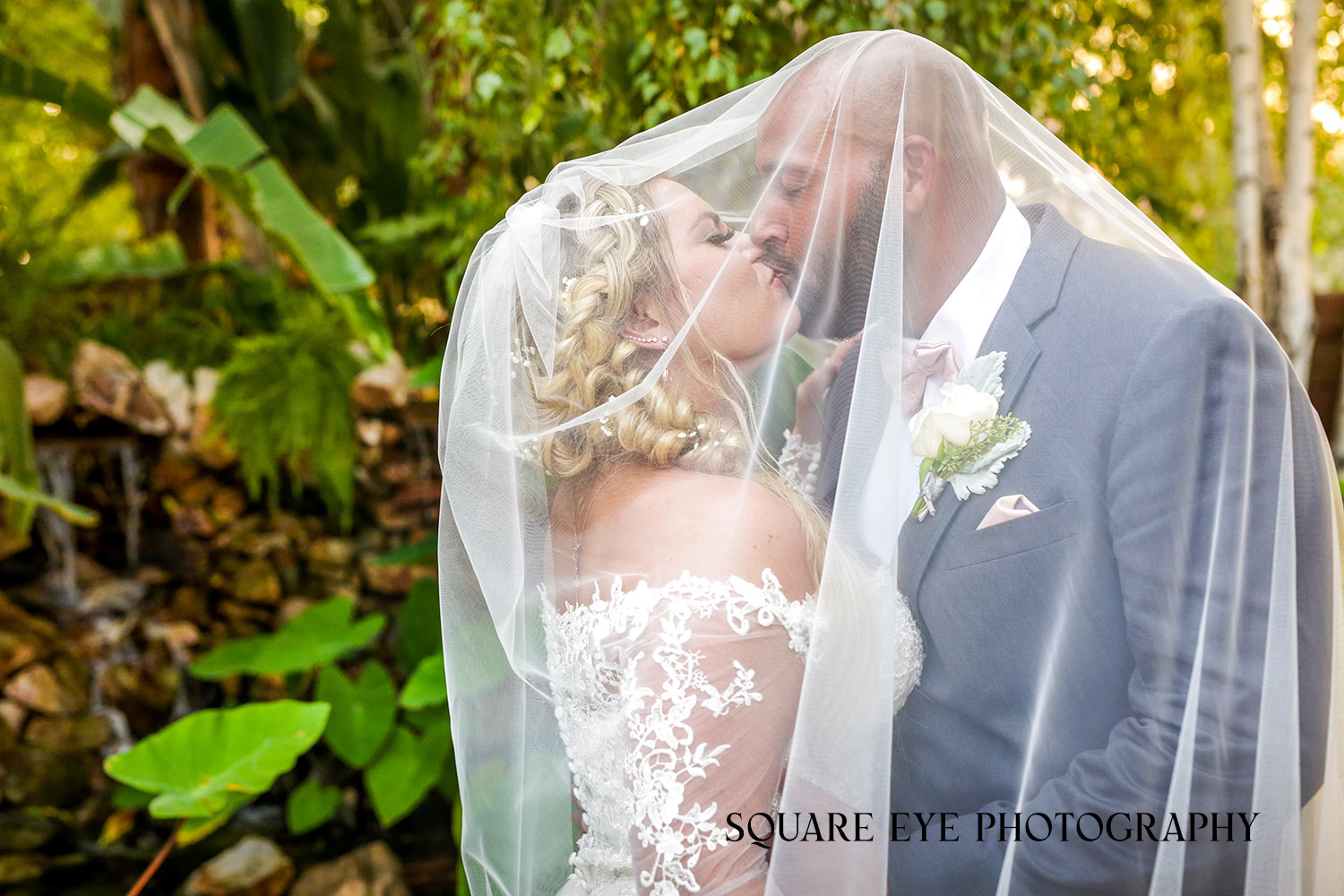
For this technique, I gently drape the cathedral veil over the bride and groom, allowing the fabric to fall naturally around them as they kiss, embrace, or simply enjoy a quiet moment together.
Unlike my more dramatic flying veil photographs, I'm not necessarily looking for movement. Instead, I want to create a soft, intimate atmosphere where the couple feels wrapped up in their own little world.
I love how versatile this technique is! I've photographed couples beneath their veils at sunset, surrounded by beautiful gardens, and even sitting together on the ground.
Each setting creates a completely different mood, even though the concept remains the same.
One important tip: pay attention to how the fabric falls across their faces. I want the veil to soften the photograph without hiding their expressions or creating distracting shadows.
And don't forget to check your focus when photographing through the tulle!
Sometimes all
Fashion-Inspired Bridal Portraits: Lying on the Veil
Who says brides have to stand up for all their wedding portraits? Certainly not me! 😂
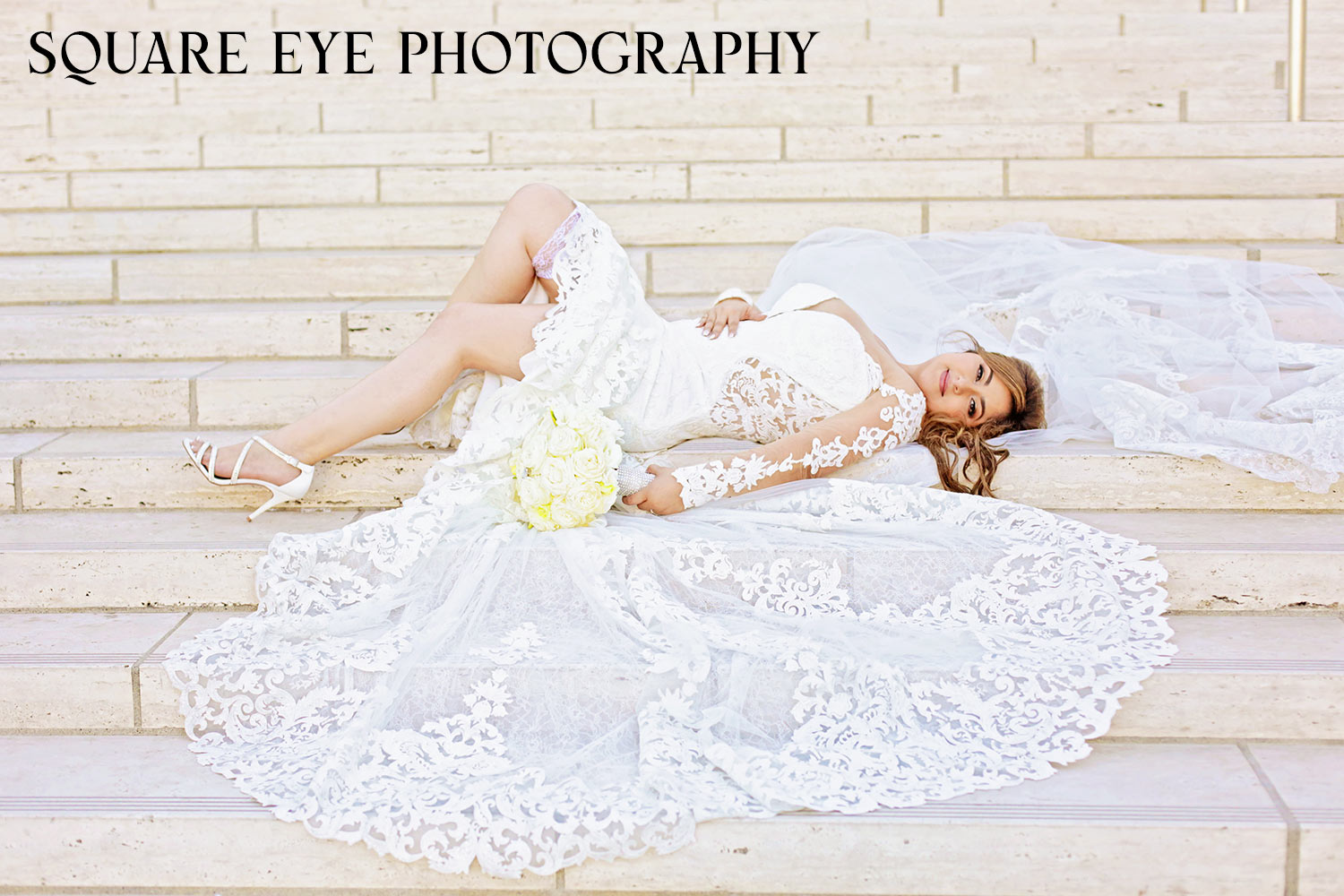
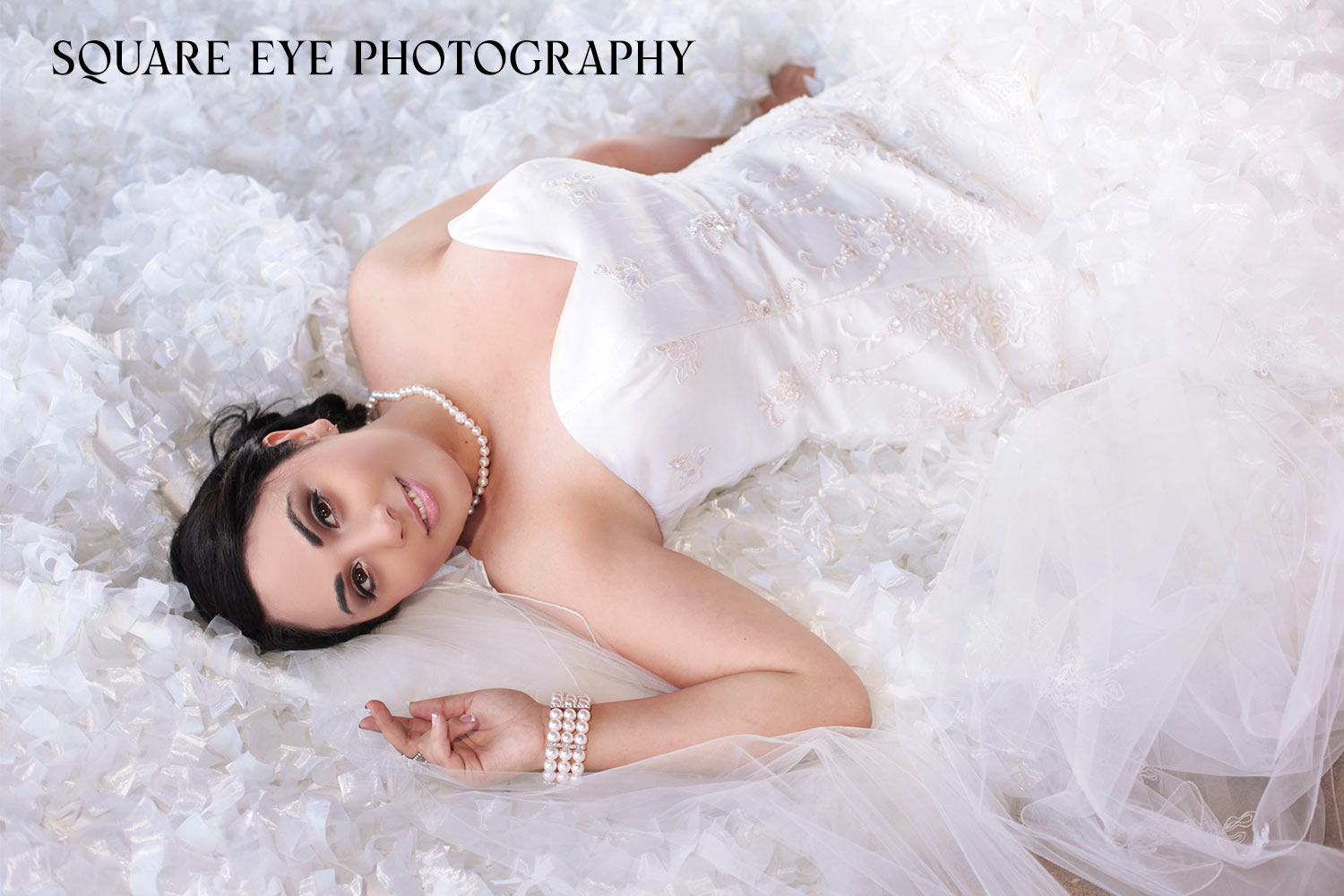
One of my favorite ways to create dramatic, fashion-inspired bridal photographs is to have the bride recline directly on her cathedral veil.
I love spreading the fabric around her to create beautiful shapes, textures, and leading lines. Sometimes I'll arrange the veil in a large circle around the bride. Other times, I'll let it cascade down a staircase or flow naturally around her body.
The key is to pose the bride first, making sure she's comfortable and that her body position looks intentional. Then, I arrange the fabric to complement her pose.
I also pay attention to my shooting angle. Photographing from above can emphasize the veil's beautiful details, while shooting from a lower perspective can create a more dramatic, fashion-editorial composition.
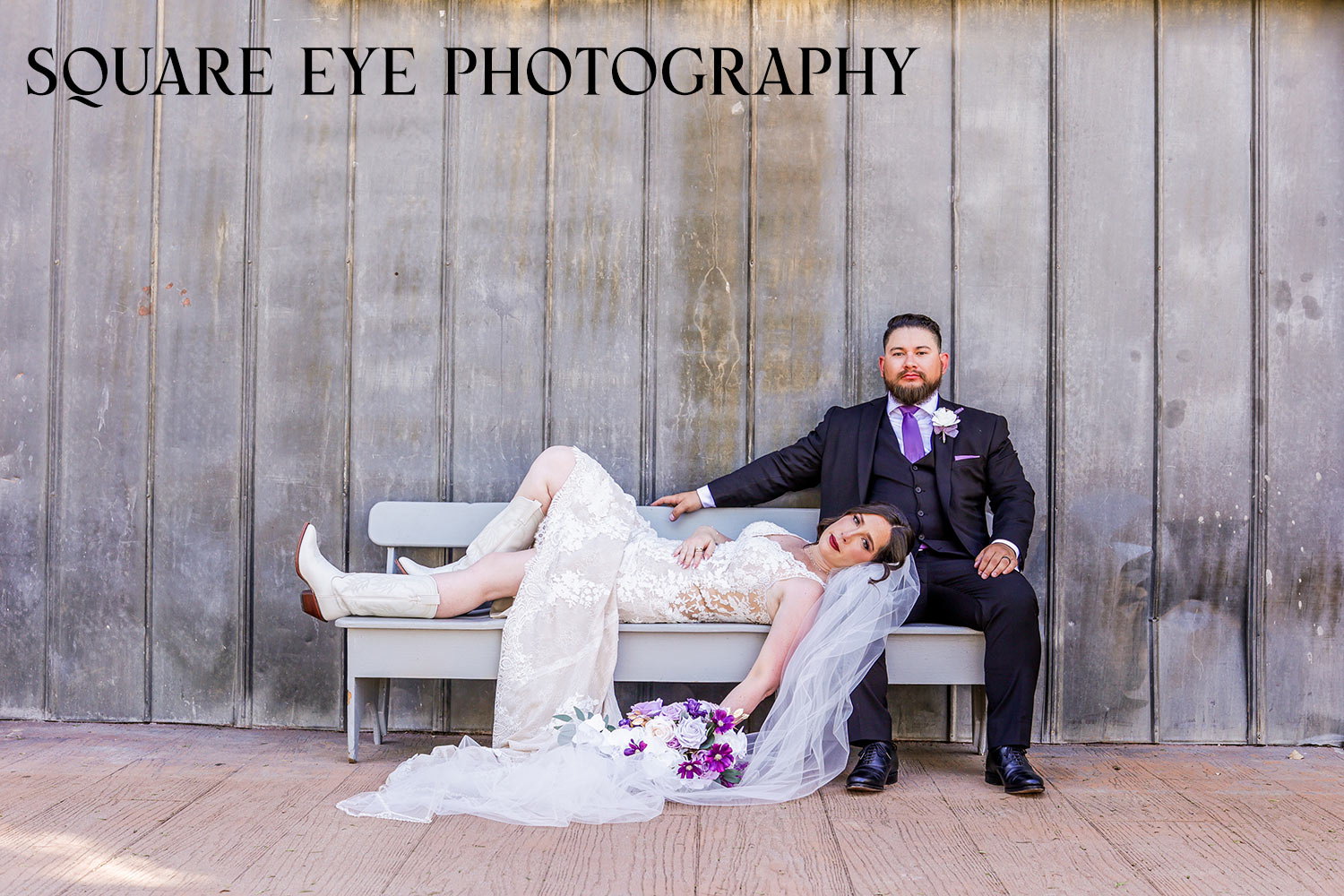
And don't forget that these poses can work beautifully with couples, too! Having the bride recline across the groom's lap can create a fun, unexpected portrait with plenty of personality.
Of course, always check that the surface is clean, safe, and comfortable before asking anyone to lie down.
These photographs are some of my favorites because they combine creative posing, beautiful fabric, and a little bit of bridal fashion attitude!
Keep Experimenting, Keep Creating!
After more than 30 years of photographing weddings, I still find new ways to get creative with something as simple as a cathedral veil.
And that's one of the things I love most about photography. There's always another angle to explore, another lighting technique to try, or another way to see something familiar.
Whether you're experimenting with flying veils, dramatic off-camera flash, romantic portraits, or fashion-inspired posing, I hope these cathedral veil photography tips have given you a few new ideas to try at your next wedding.
But here's the most important thing I want you to remember: Don't be afraid to experiment!
Not every photograph is going to work the first time. Sometimes the lighting isn't quite right, the veil refuses to cooperate, or your brilliant idea turns into something completely unexpected.
And that's okay! Some of my favorite photographs have come from simply trying something different.
So get creative, have fun with your couples, and don't be afraid to make a little magic!
Want to Learn More Photography Techniques?
If you enjoyed these tips and want to take your photography to the next level, I'd love to help!
I offer photography education and personalized mentorship for photographers who want to feel more confident with posing, off-camera flash, lighting, and creating beautiful images in real-world situations.
Whether you're just getting started or you've been photographing for years, there's always something new to learn.
Explore my Photography Education & Mentorship programs to discover free tutorials, behind-the-scenes lessons, and one-on-one mentoring opportunities.
And remember, photography should be creative, exciting, and FUN. Never stop playing! ❤️
If you're still learning how to balance flash with ambient light, Canon also has a helpful guide to wedding photography lighting techniques that's worth exploring.